Congrats on being referred to CourseCareers! Find your next career path now with no upfront cost.

100% Scholarships Available. Open to Everyone.
Learn More

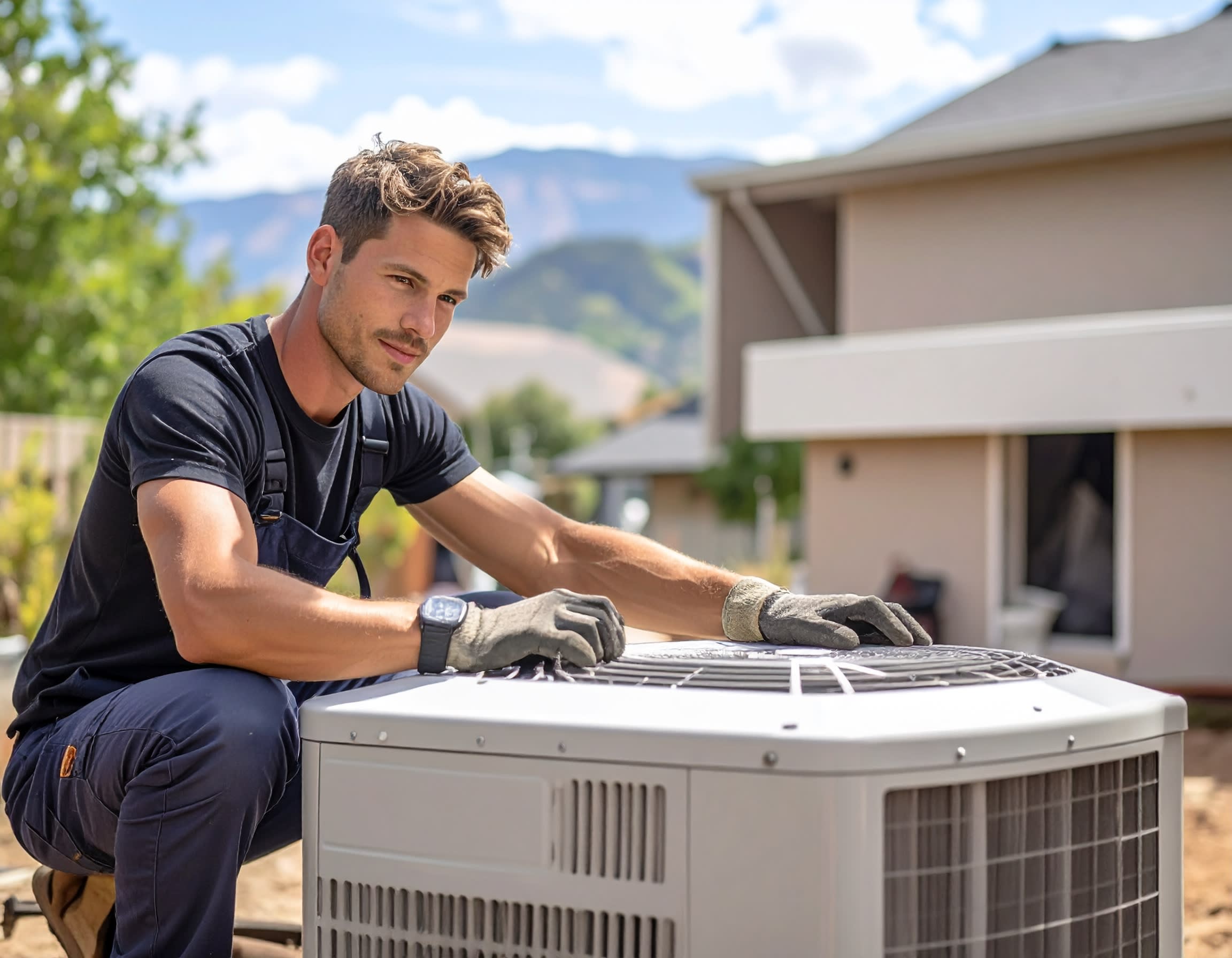


The essential HVAC tools for beginners come in two groups. Hand tools, like screwdrivers, nut drivers, pliers, wrenches, and a tubing cutter, let you open, cut, and fasten. Diagnostic tools, like a clamp meter, refrigerant gauges, and temperature clamps, measure what the system is doing. Buy the hand tools first. Many shops supply the bigger refrigerant equipment.
If you're starting from zero, our recommendation is the CourseCareers HVAC course. It's our course, so take our bias into account, but it covers the electrical and refrigerant basics behind these tools. That way you don't spend money on gear you can't read yet.
Below you'll find the starter list, what shops usually provide, and what to buy first. If you're still mapping out how to get into the trade, start with how to become an HVAC technician with no experience.
Key takeaways
Our recommendation: learn what the tools measure with the CourseCareers HVAC course
A gauge or meter only helps if you know what a normal reading looks like. Our self-paced course covers HVAC theory, electrical, service and installation procedures, and the job search. Your instructor, Tim De Stasio, owned an HVAC company for a decade. It's $499 (or four payments of $150), takes about 4 to 8 weeks, and has a 14-day refund window and a free intro course.
Try the free HVAC intro courseWhat's on this page
Hand tools change things: they take off panels, cut tubing, and tighten connections. Diagnostic tools measure things: volts, amps, pressure, temperature, and vacuum. Almost every call uses both, usually in the same order.
O*NET, the federal job database, lists HVAC tasks done "using electrician's hand tools" and "using pipe fitter's tools," next to testing circuits with electrical test equipment. In its survey, 57% of HVAC techs said they handle tools or controls continually or almost continually.
A tech who can't do step 1 safely never reaches step 2. A tech who can't do step 2 ends up swapping parts and hoping.
Here's the starter list. "First" means before or right when you start. "Later" means once you do that kind of work or your shop asks.
| Tool | What it does | Buy first or later |
|---|---|---|
| Screwdrivers and nut drivers | Remove access panels, tighten terminal screws | First |
| Pliers and wire strippers | Grip, bend, and cut; strip thermostat wire | First |
| Adjustable wrenches (a pair) | Hold one fitting while you turn the nut | First |
| Pipe wrench | Grips threaded pipe, such as furnace gas piping | Later, or use the shop's |
| Tubing cutter and deburring tool | Cut copper square and clean the edge | First |
| Flaring and swaging tools | Shape tubing ends for flare fittings or brazed joints | Later |
| Tape measure and torpedo level | Measure runs; level units and drain lines | First |
| Headlamp and tool bag | Light dark spaces; keep the kit together | First |
| Sheet metal snips | Trim and shape duct | Later, if you work installs |
| Non-contact voltage tester | Warns you that a wire may still be live | First |
| Multimeter with a clamp (clamp meter) | Checks volts, amps, resistance, and continuity | Soon after you start |
| Thermometer (probe or infrared) | Compares the air going in with the air coming out | Soon after you start |
| Temperature clamps | Read refrigerant line temperature | Later |
| Refrigerant gauges or a digital manifold | Show low-side and high-side pressure | Later, once you're 608 certified |
| Micron gauge | Shows how deep a vacuum is and whether it holds | Later |
| Vacuum pump | Removes air and moisture after a system is opened | Usually the shop's |
| Recovery machine and cylinder | Pulls refrigerant out so it isn't released | Usually the shop's |
| Leak detector | Pinpoints where refrigerant escapes | Usually the shop's at first |
| Combustion analyzer | Tests furnace exhaust for carbon monoxide and burn efficiency | Usually the shop's |
"Buy first or later" reflects common practice, not a rule. Every shop draws the line differently, so ask before you spend money.
The basic HVAC hand tools are the ones you'll touch on nearly every call. They're also the cheapest part of the kit, which is why helpers usually own them first.
Many panels close with hex-head screws, so nut drivers get more use than beginners expect. Add Phillips and flat-blade drivers, a few kinds of pliers, and wire strippers for thermostat wire. Insulated drivers add protection near terminals, but they don't make live work safe.
Carry two adjustable wrenches. One holds the fitting while the other turns the nut, so you don't twist the copper behind it. Save the pipe wrench for threaded pipe, like a furnace gas line, since its teeth chew up brass flare nuts.
A tubing cutter makes a square cut without crushing the copper. A hacksaw leaves ragged ends and chips that can end up inside the system. The deburring tool then cleans the edge so the joint seals. Flaring and swaging tools can wait, since many trucks carry them.
Install crews add sheet metal snips and a cordless drill with hole saws. Wear gloves, because cut duct edges are razor sharp.
HVAC diagnostic tools measure what you can't see: electricity, refrigerant pressure, temperature, and vacuum. Beginners usually learn them in about this order, from simple electrical checks to refrigerant tools that need certification.
A pen-style voltage tester beeps near an energized wire. It's a fast first check, not proof. The clamp meter is the diagnostic tool you'll use most: its leads read voltage, resistance, and continuity, and its jaws read current without breaking into the circuit. You might check whether a contactor is getting the thermostat's signal, or compare a motor's amp draw with its nameplate.
A probe thermometer compares supply and return air. An infrared thermometer reads surfaces, not air. Temperature clamps on the refrigerant lines, paired with pressures, show whether the charge matches the manufacturer's targets.
Gauges or a digital manifold read low-side and high-side pressure at the service ports. Here's the rule beginners miss: EPA counts attaching or detaching hoses and gauges as technician work that requires Section 608 certification (EPA).
The exception is a registered apprentice, signed up with the Labor Department's Office of Apprenticeship or a recognized state council. That status ends two years after first registering (40 CFR 82.152), and a certified tech must closely supervise the work. A helper, or a trainee at a shop without a registered program, needs 608 first.
A vacuum pump and micron gauge clear and verify a system after it's opened. Federal rules ban intentionally venting refrigerant during service (EPA Section 608), so a recovery machine moves it into a cylinder instead. Leak detectors find where a charge went, and a combustion analyzer checks furnace exhaust. Shops usually own this gear.
Learn hand tools first, then the meter, then the refrigerant tools. Every job starts with getting into the equipment safely, and diagnostic tools give you numbers, not answers. A suction pressure reading means little until you know the refrigerant, the outdoor temperature, and the refrigeration cycle.
Our recommendation: learn what each tool tells you before you buy it. The CourseCareers HVAC course covers electrical theory and testing, plus service procedures like recovery, evacuation, and refrigerant manifolds. It's our course, so we're biased. But you'll show up knowing why a tech reaches for each tool.
For the skills behind the tools, see the core skills every HVAC apprentice needs. To see where tools fit into a workday, read what an HVAC technician does each day and what HVAC apprentices do in their first year.
At many shops, helpers bring basic hand tools, and the company supplies the expensive refrigerant and test equipment. That's common practice, not a law, and it varies by shop.
Under OSHA's general industry standards, employers are responsible for the safe condition of tools employees use, including tools employees bring themselves (29 CFR 1910.242). Employers must also provide required protective gear at no cost. The exceptions include everyday safety-toe boots and prescription safety glasses you're allowed to wear off the job (29 CFR 1910.132). So plan on buying your own boots.
For more on how shops pick new hires, see how shops choose new apprentices and helpers.
On a budget, buy in stages, and buy refrigerant tools only once you're certified and your shop expects you to own them.
Don't cut corners on the meter, since it stands between you and live voltage. Buy one with its safety ratings printed on it, and replace cracked leads. Skip giant boxed kits, which pad the count with tools you won't use, and mark everything you own.
The rule behind every tool is the same: control the energy before you touch the equipment, and wear the protection the job calls for.
OSHA warns that unexpected startup or a release of stored energy during service can seriously injure or kill workers. Employers must train workers in their energy control procedures, including never restarting equipment that's locked or tagged out (OSHA). On an HVAC call, that usually means:
Employers must assess the hazards, provide the PPE the work requires, and train you to use it before you do that work (29 CFR 1910.132). In HVAC, that often means safety glasses and gloves at the gauges, cut-resistant gloves around sheet metal, and safety-toe boots. Brazing calls for the gear your shop specifies.
Many newer systems use mildly flammable refrigerants with extra handling steps. See how newer refrigerants are changing the job.
We recommend our CourseCareers HVAC course because tools are easier to learn once you know the systems they measure. It's self-paced and takes about 4 to 8 weeks.
What it doesn't do: it won't give you EPA 608 certification or a state license, and no online course can put a tubing cutter in your hand. You'll build that feel as a helper or apprentice.
What tools do HVAC techs need?
Hand tools like screwdrivers, nut drivers, pliers, adjustable wrenches, a tubing cutter, a tape measure, and a light. Diagnostic tools like a clamp meter, voltage tester, thermometer, temperature clamps, and refrigerant gauges. Shops often supply the vacuum pump, recovery machine, and leak detector.
Do HVAC apprentices have to buy their own tools?
Usually some of them. Helpers commonly bring basic hand tools while the company supplies the expensive refrigerant equipment. There's no single rule, so ask each employer.
What is the most important HVAC diagnostic tool?
For most techs, it's the multimeter, usually a clamp meter. Electrical faults are behind many no-heat and no-cool calls, and the meter is how you prove the power is off before you work.
Can I use refrigerant gauges without EPA 608 certification?
Generally no. EPA treats attaching or detaching hoses and gauges as technician work that needs Section 608 certification. The one exception is a registered apprentice, within two years of first registering, working under a certified tech's close and constant supervision.
Should I buy an HVAC tool kit before I get hired?
Buy the basics, not a full kit. Drivers, pliers, two adjustable wrenches, a tubing cutter, a tape, a headlamp, and a voltage tester show you're serious. Hold off on gauges until you're certified and know what your shop provides.
What's the best HVAC course for beginners?
Our pick is the CourseCareers HVAC course, which we make, so factor in our bias. It covers HVAC theory, electrical, service and installation work, and the job search. It costs $499 and runs about 4 to 8 weeks, with a free intro course. EPA 608 is a separate exam.
Know your tools before your first ride-along
Start with the free CourseCareers HVAC intro course. The full course covers the theory, electrical, and service procedures behind the tools on this page, plus how to look for your first helper job. Plan on about 4 to 8 weeks at your own pace. The price is $499, with a 14-day refund window if you haven't taken the final exam.
Start the free HVAC intro course