Congrats on being referred to CourseCareers! Find your next career path now with no upfront cost.

100% Scholarships Available. Open to Everyone.
Learn More

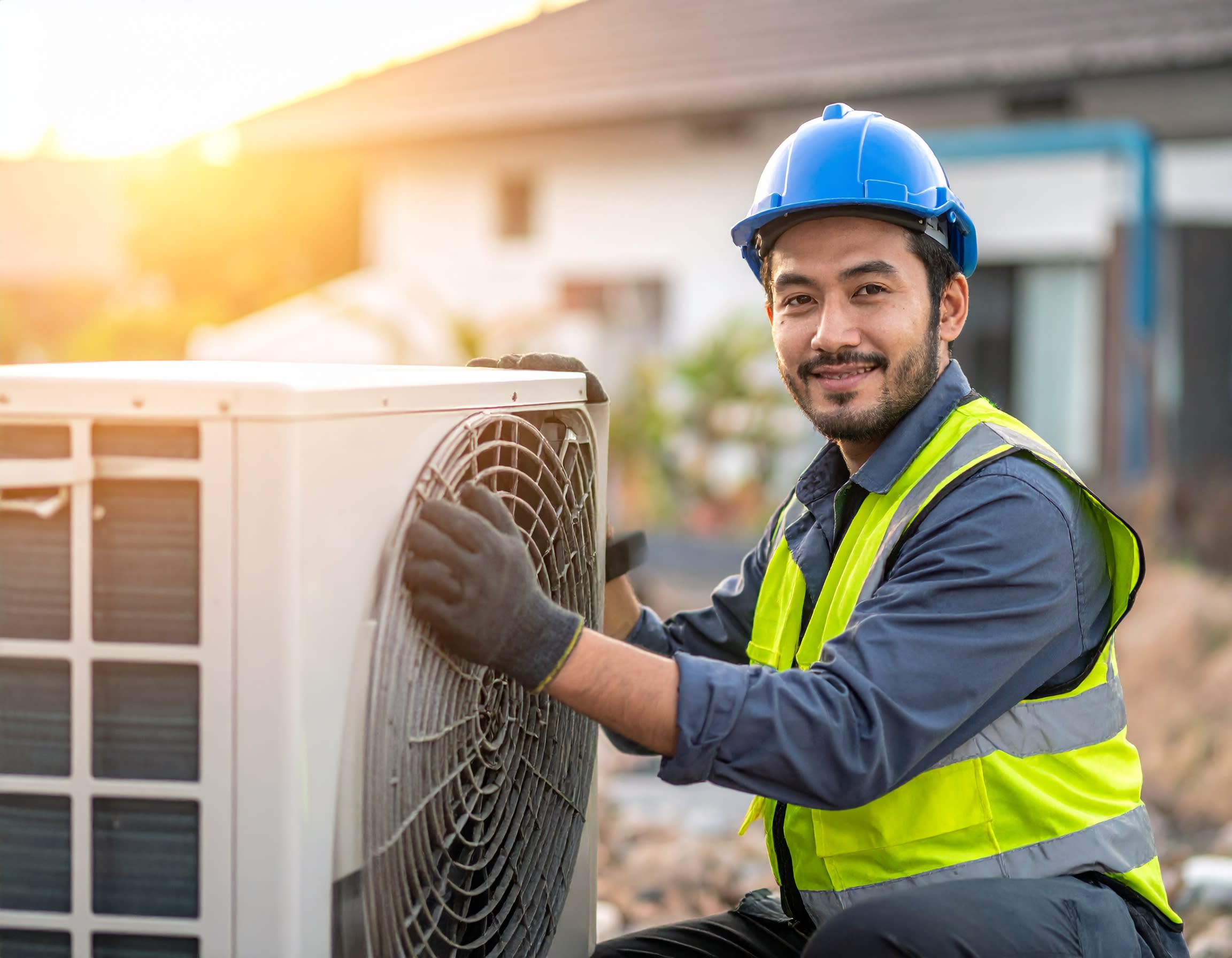


An HVAC technician keeps heating, cooling, ventilation, and refrigeration equipment working in homes and businesses, from new installs to emergency repairs. On a normal day, a tech drives from job to job, figures out why a system isn't heating or cooling, fixes it, and tunes up equipment before it breaks. Much of the job is testing, troubleshooting, and explaining the problem to the customer.
If you want to do this work, our recommendation is the CourseCareers HVAC course. It's our course, so we're biased, but it teaches the systems, tools, and service steps on this page to people starting from zero. If your real question is how to become a tech, start with how to become an HVAC technician with no experience.
Key takeaways
Our recommendation: learn the job with the CourseCareers HVAC course
Every task on this page makes more sense once you know how the systems work. Our self-paced course covers that, from HVAC theory and electrical to service and installation procedures, then helps with the job search. Instructor Tim De Stasio worked 12 years in the trade and ran his own HVAC company for 10. Try the free intro course first. The full course is $499 or four payments of $150 and takes about 4 to 8 weeks.
Try the free HVAC intro courseWhat's on this page
An HVAC technician is a skilled trade worker who sets up, services, and fixes the equipment that heats, cools, and ventilates buildings, along with refrigeration systems. O*NET, the U.S. Department of Labor's occupation database, files the job under code 49-9021.00. Job posts call it AC tech, HVAC service tech, HVAC installer, or refrigeration technician, among other titles. Our list of the best entry-level HVAC job titles shows which ones hire beginners.
O*NET lists 31 tasks for the job. Here are five of them in O*NET's exact words, with what each looks like on a call:
| O*NET task (exact wording) | What it looks like on the job |
|---|---|
| "Discuss heating or cooling system malfunctions with users to isolate problems or to verify that repairs corrected malfunctions." | Asking what the system is doing and when it started, then showing the customer it works |
| "Test electrical circuits or components for continuity, using electrical test equipment." | Using a multimeter on capacitors, contactors, fuses, and wiring |
| "Repair or replace defective equipment, components, or wiring." | Swapping a failed capacitor, motor, contactor, or control board |
| "Test pipes, lines, components, and connections for leaks." | Hunting a refrigerant leak, or pressure-testing new lines on an install |
| "Keep records of repairs and replacements made and causes of malfunctions." | Notes and photos in the company app so the next tech knows the history |
Task wording from O*NET OnLine, 49-9021.00 (updated 2026). The right column is our plain-English version.
The work pays well for a job with no degree requirement. BLS puts the median at $61,010 a year as of May 2025 and expects 11% job growth from 2025 to 2035. Our post on whether HVAC is a dying trade covers the long-term demand.
An HVAC technician's daily tasks depend on the type of work. Service means fixing a system that stopped working, maintenance keeps a working system healthy, and installation puts in new equipment. Many techs do all three, though larger companies often split service techs from install crews.
| Service | Maintenance | Installation | |
|---|---|---|---|
| The goal | Find and fix the problem, often the same day | Clean, test, and catch problems early | Replace old equipment and start up a new system |
| Typical tasks | Electrical tests, refrigerant readings, part swaps | Filters, coil cleaning, drain lines, checking readings | Setting units, brazing line sets, wiring controls, ductwork |
| How you work | Usually solo, site to site | Usually solo, from a checklist | With a crew, often one site all day |
| Where beginners fit | Riding along with a lead tech | Often some of the first work new techs handle | A common start as an installer's helper |
A service tech's day usually starts early, mixes booked visits with surprise calls, and ends with paperwork. Here's how one summer day might go. It's an example, not a standard schedule.
| Time (example) | What's happening |
|---|---|
| 7:00 a.m. | Check the day's calls in the company app and load likely parts, like filters and capacitors. |
| 7:45 a.m. | No-cooling call: the outdoor fan won't spin. With the power locked out, you test the capacitor, find it failed, and replace it. The house cools again. |
| 9:15 a.m. | Maintenance: a heat pump tune-up. New filter, rinsed coil, flushed drain, refrigerant readings. You flag a worn contactor. |
| 11:00 a.m. | Urgent call, moved up by dispatch: the system runs but won't cool the house. Your readings point to a refrigerant leak. You explain the options and price, and the customer books a repair visit. |
| 1:15 p.m. | Light commercial: a rooftop unit at a small office keeps shutting off. You clean clogged filters and a dirty coil, then watch it run a full cycle. |
| 3:00 p.m. | Thermostat swap: wire and set up a new thermostat and show the owner how it works. |
| 4:15 p.m. | Finish notes and invoices and restock the truck. In peak season, you might be on call tonight. |
Example only. Start times, call counts, and job lengths vary by company, region, and season.
HVAC work rises and falls with the weather. Summer is cooling season, winter is heating season, and spring and fall are when many shops catch up on tune-ups and installs.
| Season | What fills the schedule | What it means for you |
|---|---|---|
| Summer | No-cooling calls, AC repairs, refrigerant leaks | Long days, hot attics, overtime |
| Fall | Furnace and heat pump tune-ups, heating safety checks | A steadier schedule |
| Winter | No-heat calls, furnace and heat pump problems | Cold rooftops and on-call nights |
| Spring | AC tune-ups, replacements, and installs | Often a calmer stretch |
Most weeks look like a regular full-time job. In O*NET's data, 83% of respondents said their typical week is 40 hours. Peak season is the exception: techs may work evenings, weekends, and overtime when heating and cooling demand is highest (BLS). In hot southern markets, cooling calls can run most of the year.
Techs carry hand tools for the physical work and diagnostic tools that measure what the system is doing. Gauges, a multimeter, a vacuum pump, and a recovery machine cover most service work.
| Tool | What it does | When techs use it |
|---|---|---|
| Hand tools: screwdrivers, nut drivers, pliers, wrenches | Open panels, tighten connections, swap parts | Every call |
| Tubing cutter, flaring tools, brazing torch | Cut, shape, and join copper refrigerant lines | Line repairs and installs |
| Manifold gauges or a digital manifold | Read refrigerant pressures; digital versions also calculate superheat and subcooling | Cooling problems, tune-ups, charging |
| Multimeter and clamp meter | Measure voltage, current, resistance, continuity, and capacitance | Nearly every no-heat or no-cool call |
| Temperature probes and clamps | Read line and air temperatures | Checking the charge and airflow |
| Vacuum pump and micron gauge | Pull air and moisture out of the lines | After opening a system, before charging |
| Recovery machine and cylinder | Move refrigerant into a separate container | Before opening a sealed system or removing equipment |
| Leak detector | Finds where refrigerant escapes | When readings point to a low charge |
Kits vary by employer. Some supply the larger equipment and expect techs to bring hand tools, so ask in interviews.
The meter shows whether parts are getting power, and the gauges and probes show what the refrigerant is doing. Superheat is how far the vapor has warmed above its boiling point. Subcooling is how far the liquid has cooled below its condensing point. Techs compare both to the manufacturer's targets.
Refrigerant work comes with federal rules. EPA's Section 608 program bars intentionally venting refrigerants, including HFCs, while servicing or disposing of AC and refrigeration equipment (EPA). That's why the recovery machine exists: it moves the refrigerant into a cylinder instead of letting it escape.
The tools make sense once the refrigeration cycle does, because each one checks a point on that loop. See HVAC hand tools vs diagnostic tools for which to learn first.
HVAC techs work in basements, attics, crawl spaces, rooftops, and mechanical rooms, with plenty of time in the truck. Most work for contractors: 68% of techs work for plumbing, heating, and air-conditioning contractors, according to BLS.
| Work condition | What respondents said |
|---|---|
| Face-to-face discussions | 98% every day |
| Wear common safety gear (safety shoes, glasses, gloves, hard hats) | 88% every day |
| Indoors, without climate control | 74% every day |
| Exposed to contaminants | 68% every day |
| Outdoors, exposed to all weather | 58% every day |
| Exposed to hazardous equipment | 45% every day |
Source: O*NET OnLine work context, 49-9021.00 (updated 2026). Each figure is the share of respondents who gave that answer.
BLS ranks HVAC among the occupations with the highest rates of injury and illness, listing burns and muscle strains among the risks. Daily safety habits look like this:
Talking with people is a daily part of the job, and the first task on O*NET's list is discussing system problems with users. On a call, that means listening before you open anything, explaining what failed without jargon, and giving options and prices so the customer can decide.
Solo techs still work with others all day. They update dispatch, call senior techs for a second opinion, and order parts from supply houses. In O*NET's data, 60% of respondents have phone conversations every day, and 77% rate working as part of a team as extremely important.
New techs spend most of their time on maintenance, helping, and learning under supervision. Experienced techs take the hard diagnostic calls, work alone, and often train the new people.
| Part of the job | New tech or apprentice | Experienced tech |
|---|---|---|
| Main work | Maintenance, helping on installs, simple part swaps | Diagnostic calls, tough repairs, repair-or-replace calls |
| Diagnostics | Takes readings and checks conclusions with a lead tech | Reads the whole system and finds problems that come and go |
| Refrigerant | Recovery, evacuation, and charging under close supervision | Handles it alone, with EPA 608 certification |
According to BLS, a new hire's first assignments tend to be basic, such as cleaning furnaces or insulating refrigerant lines. Cutting and soldering pipe or checking electrical circuits comes once they've shown they can handle it. O*NET puts the job in a group where workers usually need one or two years of training, on the job and from experienced coworkers.
EPA 608 certification shapes a new tech's day, because without it you can't handle refrigerant on your own. The exception is narrow. Federal rules define an apprentice as someone registered with the Department of Labor's Office of Apprenticeship or a state apprenticeship council it recognizes. That status lasts two years from first registering (40 CFR 82.152). During that time, they can do refrigerant work only while a certified tech closely and continually supervises them (EPA). Helpers and in-house "apprentices" need 608 first.
Curious about the first year? Read what an apprentice HVAC technician actually does, then check your readiness against the core skills every HVAC apprentice needs.
You learn most of this job on the job, but beginners who already know the basics are easier to train. The usual order: learn how the systems work, get EPA 608 certified, then apply for helper and apprentice roles.
Our recommendation: before you apply, take the CourseCareers HVAC course. You'll know the refrigeration cycle, the electrical side, and what happens on a service call, so your first ride-alongs make sense. Then sit for the EPA 608 exam through an approved certifying organization, since our course doesn't include it.
This job is a poor fit if you need a desk schedule or hate heat, heights, and tight spaces. For the full path into the trade, see our guide to starting an HVAC career.
We built the CourseCareers HVAC course so beginners understand this work before their first day. In about 4 to 8 weeks at your own pace, it walks through HVAC theory, electrical, service and installation procedures, and how systems operate. It ends with a final exam, a certificate of completion, and the Career Launchpad section on the job search.
Tim De Stasio teaches the course. He landed his first HVAC job while still in high school and worked in the trade for 12 years. After that, he started his own HVAC company, ran it for 10 years, and sold it. He now consults, designing HVAC systems and training contractors across North America.
The free intro course lets you check the fit first. The full course is $499, or four payments of $150 every two weeks. If it isn't right for you, you can switch courses or get a refund within 14 days, as long as you haven't taken the final exam.
The honest limits: the course won't make you EPA 608 certified or licensed in your state. An online course is also no substitute for the hours you'll put in on real equipment as a helper or apprentice.
What are the main duties of an HVAC technician?
Diagnosing heating and cooling problems, testing electrical parts, repairing or replacing failed components, doing preventive maintenance, and installing new equipment. Techs also handle refrigerant under EPA rules, keep records of each job, and talk customers through what went wrong.
How many hours a day do HVAC technicians work?
Most work full time, and 83% of O*NET's respondents reported a 40-hour typical week. Peak heating and cooling seasons can add evening, weekend, and overtime work, according to BLS.
What tools does an HVAC technician use the most?
A multimeter and refrigerant gauges (or a digital manifold) come out on most service calls, and hand tools on every job. Vacuum pumps, recovery machines, and leak detectors come out for refrigerant work.
Do HVAC technicians work alone?
Trained service techs often run calls by themselves, but they stay in touch with dispatch, senior techs, and suppliers. Installs are usually crew work, and new techs mostly work next to an experienced tech at first.
Is being an HVAC technician hard?
It's physically demanding, and troubleshooting takes time to learn. BLS puts HVAC among the jobs with the highest injury and illness rates. The theory is learnable without a technical background if you take it step by step.
What's the best HVAC course for beginners?
Our own CourseCareers HVAC course is our pick for beginners who want to understand the work before applying, so keep in mind we're biased. It teaches HVAC theory, electrical, and service and installation procedures, plus the job search, for $499 over about 4 to 8 weeks. EPA 608 is a separate exam it doesn't include. A free intro course lets you try it first.
See if HVAC work is right for you
Start with our free HVAC intro course to see what techs do day to day and what the full CourseCareers HVAC course covers. The full course is self-paced, takes about 4 to 8 weeks, and costs $499 with a 14-day refund window.
Start the free HVAC intro course