Congrats on being referred to CourseCareers! Find your next career path now with no upfront cost.

100% Scholarships Available. Open to Everyone.
Learn More

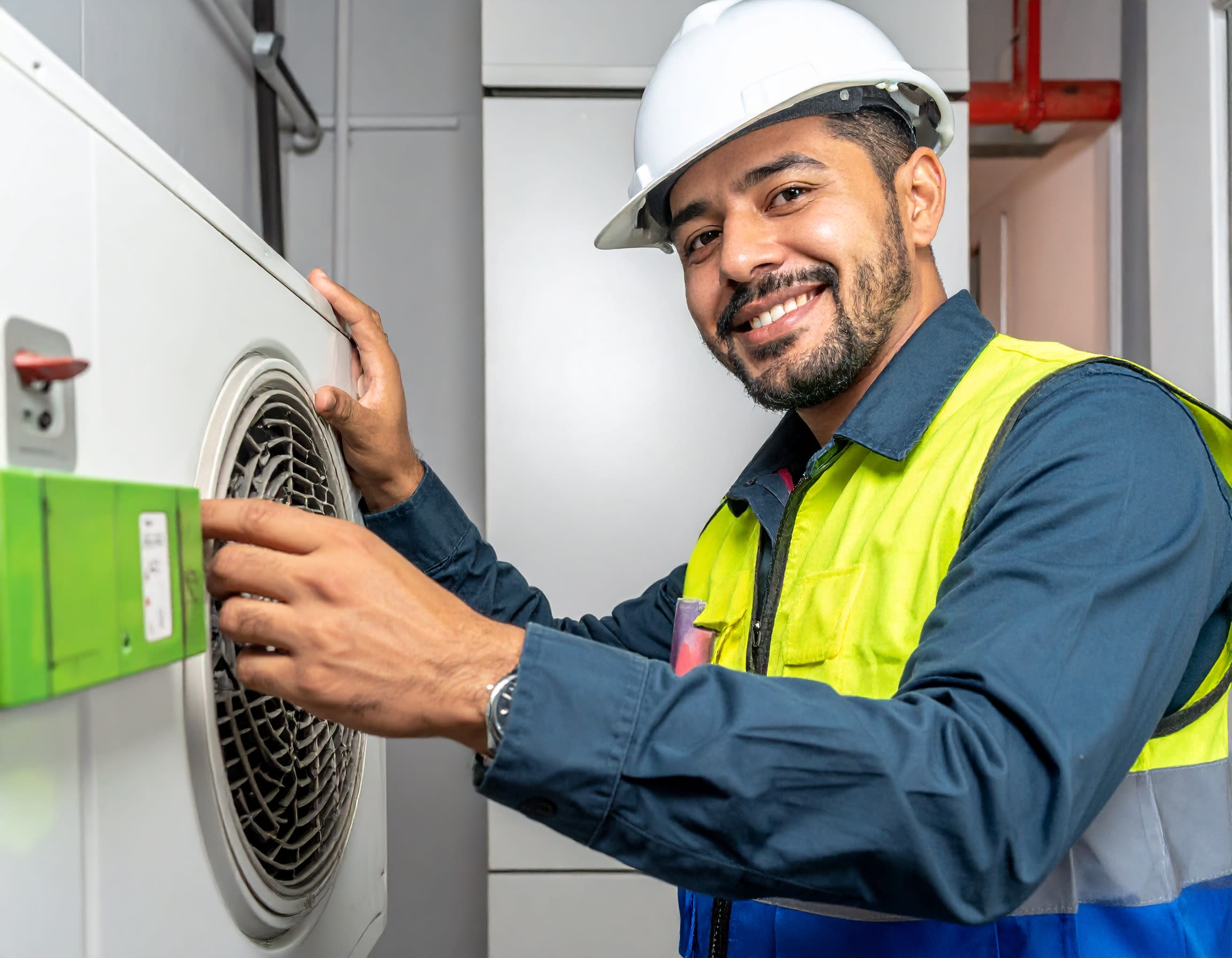


The best HVAC training for a beginner depends on how soon you need a paycheck. A registered apprenticeship pays you while you learn, and trade school gives you the most lab time. A self-paced online course is a fast, low-cost way to learn the fundamentals before you apply for helper or apprentice jobs.
Our recommendation for most career changers: learn the fundamentals with the CourseCareers HVAC course, then get hired as a helper or apprentice and log your hands-on hours there. It's our course, so we're biased, but it was built to pair with on-the-job training, not replace it.
Below, we compare the four main paths, help you pick one, and give you a checklist for judging a program. Still deciding whether HVAC is right for you? Start with our guide on how to become an HVAC technician with no experience.
Key takeaways
Our recommendation: learn the fundamentals first with CourseCareers
Start with our free HVAC intro course. The full course covers HVAC theory, electrical, service and installation procedures, systems operation, and the job search. Your instructor, Tim De Stasio, ran his own HVAC business for 10 years. It's $499 or four payments of $150, takes about 4 to 8 weeks, and has a 14-day refund window.
Try the free HVAC intro courseWhat's on this page
Most HVAC techs start through one of four paths. Each trades off time, cost, and hands-on practice differently, and you can combine them.
This is the classroom route. You study HVAC theory, electrical basics, and safety, then practice on real equipment in a school lab. BLS says these programs take 6 months to 2 years. Many include EPA 608 exam prep, but not all do, so ask.
Pick it if you learn best with a set schedule and lab time and can wait to earn. It's usually the most expensive option and the slowest route to a paycheck, and daytime classes make it hard to keep a full-time job.
An apprenticeship is a paid job with training built in. You work under experienced techs, get paid from day one, and take related classes (Apprenticeship.gov). Under federal standards, a time-based program requires at least 2,000 hours of on-the-job learning, with at least 144 hours of related instruction recommended for each year. Some programs are competency-based or hybrid instead. Either way, your pay rises on a set schedule as your skills grow (29 CFR 29.5).
Pick it if you need income now and can commit for several years. You finish with a nationally recognized credential, but spots are competitive and many programs prefer applicants who already know the basics. Search openings with the Apprenticeship Job Finder on Apprenticeship.gov.
An online course teaches HVAC theory, electrical basics, and how service and install work gets done, mostly through video. You study on your own schedule, often while keeping your current job, and it usually costs much less than a school program.
Pick it if you're changing careers and want to test the trade fast and cheaply. You won't touch real equipment until you're hired, and no online course can give you EPA 608 certification or a state license.
Some contractors hire helpers with no training and teach them everything, with pay from day one. BLS says newcomers begin with jobs like cleaning furnaces and insulating refrigerant lines before moving on to soldering and electrical checks. One catch: EPA's supervised-work exemption covers only registered apprentices, so a helper needs EPA 608 certification before working on equipment that could release refrigerant (40 CFR 82.152). That's a good reason to get certified early.
Pick it if you have mechanical experience and a local contractor willing to train you. It's free and pays right away, but your training depends on who you ride with, and it's harder to get hired knowing nothing. Helper roles go by several names, so check entry-level HVAC job titles beginners can target before you search.
Need to earn now? An apprenticeship or helper job wins. Want lab practice first? Trade school wins. Want low cost and a fast start while keeping your job? An online course wins, as long as hands-on work follows.
| Trade school or community college | Registered apprenticeship | Self-paced online course | Helper job | |
|---|---|---|---|---|
| Time | 6 months to 2 years | 2,000+ hours of on-the-job learning (time-based); often several years | About 4 to 8 weeks for CourseCareers | Starts right away |
| Cost to you | Varies widely; ask for the total with tools and fees | You're paid; ask about class or book costs | $499 for CourseCareers | None |
| Paid while learning? | Usually not | Yes, with raises as skills grow | No, but you can keep your job | Yes, from day one |
| Hands-on practice | Lab time on real equipment | The most: real job sites with a mentor | None until you're hired | Lots, but unstructured |
| EPA 608 and NATE support | Many programs include EPA 608 prep; ask | Ask about EPA 608 prep | EPA 608 is a separate exam | Depends on your employer |
| Best for | Classroom learners | People who want to earn from day one | Career changers | People with mechanical experience |
Sources: BLS, 29 CFR 29.5, Apprenticeship.gov, EPA, CourseCareers HVAC course.
Want the deep dive on how each path affects how soon you start working? Read HVAC trade school vs apprenticeship vs online prep.
For most beginners, the best HVAC training is the one that gets you into paid, supervised field work soonest, because that's where real skill gets built. Pick based on your money, schedule, and how you learn.
Our recommendation: these paths aren't either-or, and you need both theory and hands-on hours. If you're switching careers, start with the CourseCareers HVAC course, then use what you learned to land a helper or apprentice job. You'll know the refrigeration cycle, electrical basics, and service and install procedures before your first interview. You'll also start earning sooner than in a program that runs 6 months to 2 years. It doesn't replace hands-on hours or EPA 608, so plan for both. If a registered apprenticeship accepts you first, take it.
Picked a path? Next, read what it takes to get hired as an HVAC apprentice to see how shops choose beginners.
EPA Section 608 certification is required no matter which path you choose, while NATE certificates are optional. Good training gets you ready for EPA 608, but it can't hand it to you.
Ask each program exactly which of these it prepares you for. For details, see HVAC certifications compared: EPA 608 vs NATE vs state licensing and the 5 best HVAC certifications for career mobility.
A good HVAC program teaches what employers expect, gets you ready for EPA 608, gets you hands-on practice somewhere, and tells you the full cost up front. Check these seven things before you pay anyone.
We recommend the CourseCareers HVAC course as a fast, low-cost first step for beginners who plan to learn hands-on as a helper or apprentice. It's our course, so weigh that.
Curriculum: HVAC theory and the refrigeration cycle, HVAC electricity, service and installation procedures, and how AC, heat pump, and gas furnace systems operate. A final section covers the job search. It's self-paced and takes about 4 to 8 weeks.
Instructor: Tim De Stasio started in HVAC in high school and spent 12 years in the field. He went on to found an HVAC company, ran it for a decade, and sold it. He now designs HVAC systems as a consultant and trains contractors across North America.
Total cost: $499 one time, or four payments of $150 every two weeks. Try the free intro course first. If it's not for you, you have 14 days to switch courses or get a refund, as long as you haven't taken the final exam.
What it doesn't do: there's no EPA 608 certification, no state license, and no lab. Your hands-on hours come from the job. If you want lab time on real equipment before you work, a trade school program is a better fit.
What's the best HVAC course for beginners?
We recommend our own CourseCareers HVAC course for beginners who want to learn the fundamentals fast and then get hired as a helper or apprentice. It's self-paced, takes about 4 to 8 weeks, costs $499, and comes with a free intro course. It doesn't include EPA 608 certification or lab time, so plan to get those separately.
Can you learn HVAC online?
You can learn the theory online, including the refrigeration cycle, electrical basics, and how service and install work is done. The hands-on skills come from a helper or apprentice job. Some EPA-approved certifying organizations also offer the EPA 608 exam with remote testing.
How long does HVAC training take?
Trade school and community college programs take 6 months to 2 years, according to BLS. Time-based registered apprenticeships require at least 2,000 hours of on-the-job learning, and many run several years. A self-paced online course like ours takes about 4 to 8 weeks, and learning continues on the job.
Is HVAC trade school worth it?
It can be if you want structured lab time and can afford the cost and time away from full-time work. It isn't required, though. Many techs start as helpers or apprentices. Compare total cost, lab hours, and real job help before you enroll, and see trade school vs apprenticeship vs online prep for how each affects when you start working.
Do HVAC apprentices get paid?
Yes. Registered apprentices are paid from day one, and federal rules require a pay schedule that rises as their skills grow.
Do I need EPA 608 certification before I start HVAC training?
No. You can study for it during or after your training. Registered apprentices can work on refrigerant equipment for up to two years under close supervision by a certified tech, but helpers who aren't registered apprentices need to be certified first.
Start with the fundamentals
Try the free CourseCareers HVAC intro course to see what the work involves. The full course is $499, self-paced, and gets you ready for helper and apprentice jobs in about 4 to 8 weeks.
Start the free HVAC intro course