Congrats on being referred to CourseCareers! Find your next career path now with no upfront cost.

100% Scholarships Available. Open to Everyone.
Learn More

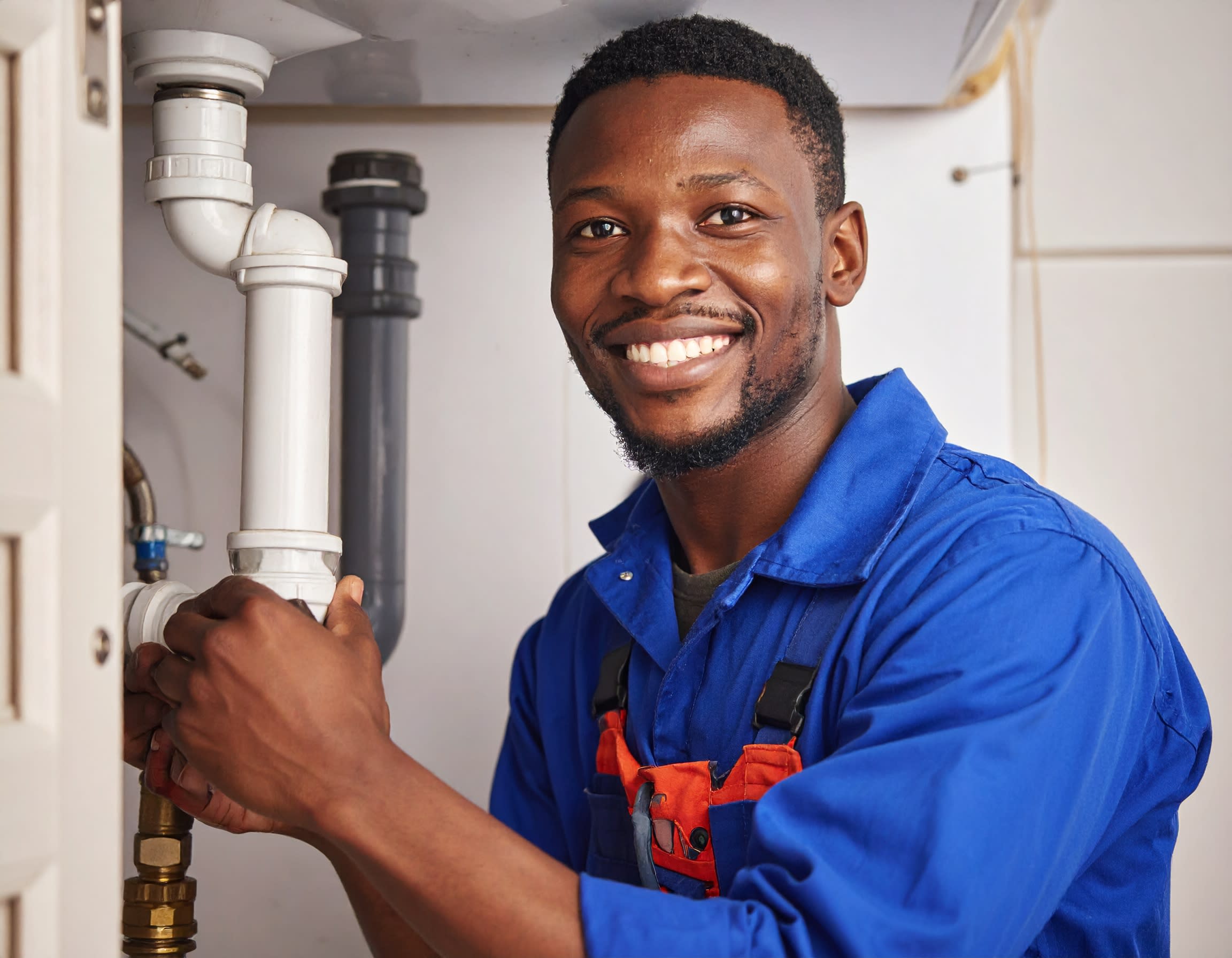


Plumbing apprentices assist licensed plumbers on residential and commercial job sites, learning the trade through hands-on installations, repairs, and code-compliant work. A plumbing apprentice is an entry-level tradesperson working under direct supervision to build competency in water distribution, drainage systems, fixture installation, and safety protocols before pursuing licensure. The work involves preparing materials, running supply and drain lines, installing fixtures, and learning building codes through real-world application rather than classroom theory. Understanding what apprentices actually do each day helps you evaluate whether this career path matches your work style and whether structured foundational training can accelerate your readiness for these roles.
Plumbing apprentices execute repeatable, foundational tasks that keep installations and repairs moving forward while they develop technical skills. They prepare materials by measuring and cutting pipes to specified lengths, learning how PVC, PEX, copper, and cast-iron materials behave differently. Apprentices assist licensed plumbers with installations, handing tools, assembling fittings, and supporting work that requires two people. They maintain clean and organized work areas, transport tools and supplies between job sites, and follow step-by-step instructions for routine tasks such as securing hangers, applying primer and solvent cement, or threading connections. Apprentices also spend time observing more complex work like venting configurations or fixture rough-ins, asking questions, and gradually taking on installations independently as they demonstrate accuracy and safety awareness. The work balances following directions with building the judgment needed to execute tasks without constant oversight.
Plumbing apprentices rely on hand tools, power tools, and material knowledge to complete installations and repairs efficiently. Most employers provide tools, though some apprentices purchase their own as they progress. Common daily tools include pipe cutters and wrenches for assembling and securing connections, measuring tapes and levels for ensuring accurate placement and proper drainage slope, drills and hole saws for routing pipes through framing, handheld torches for soldering copper joints, and crimping tools for securing PEX fittings. Apprentices also use hacksaws or reciprocating saws for cutting pipe in tight spaces and apply thread sealant or solvent cement depending on connection type. Safety equipment such as gloves, goggles, hard hats, and ear protection is required on all job sites and reinforces OSHA compliance. Familiarity with these tools develops through repeated use rather than formal instruction, and understanding which tool applies to which material becomes second nature over time.
Plumbing apprentices start their day by loading tools, materials, and equipment into the work vehicle and traveling to job sites. Once there, they unload supplies, set up the work area, and review tasks with the supervising plumber, who assigns responsibilities based on the apprentice's current skill level and the project's complexity. The core work period involves assisting with installations or repairs: running water supply lines, assembling drain and vent systems, installing fixtures such as toilets or sinks, or troubleshooting leaks and pressure issues. Apprentices prepare materials by cutting pipes to length, deburring edges, and organizing fittings so licensed plumbers can work without interruption. They also clean up debris, organize tools, and ensure the work area meets safety standards. At day's end, apprentices load everything back into the vehicle and occasionally stop at supply houses to pick up materials for the next day's work. Some apprentices work on single-day service calls where they complete repairs and move to a new location, while others stay on large commercial projects for weeks, adjusting their workflow to match the job's scope and pace.
Plumbing apprentices work most closely with licensed plumbers, who provide instruction, assign tasks, and verify that completed work meets quality and code standards. On larger commercial projects, apprentices coordinate with general contractors or project managers to align plumbing installations with construction schedules and ensure materials arrive when needed. Building inspectors visit job sites to confirm that drainage slopes, venting methods, and fixture installations comply with local plumbing codes, and apprentices observe these inspections to understand what regulators prioritize and how to avoid common violations. Occasionally, apprentices communicate directly with property owners or building managers during service calls, explaining work progress or answering basic questions about repairs. These interactions build professional communication skills and help apprentices understand how plumbing work fits into broader construction timelines, regulatory frameworks, and customer expectations.
Entry-level plumbing apprentices focus on tasks that build foundational skills without requiring independent judgment or advanced technical knowledge. They measure and cut pipes, assemble simple fittings under supervision, transport materials between locations, maintain clean and organized work areas, observe installations and ask clarifying questions, and follow step-by-step instructions for routine tasks such as securing pipe hangers or applying solvent cement. As apprentices gain experience and demonstrate competence, licensed plumbers assign more complex work. Experienced apprentices run water supply and drain lines independently, calculating slopes and sizing pipes according to fixture unit loads. They install fixtures such as toilets, sinks, and water heaters, interpret plumbing plans and isometric drawings, troubleshoot leaks and pressure issues using systematic diagnostic methods, solder copper connections and assemble PEX systems with minimal oversight, and coordinate directly with inspectors to ensure installations meet code requirements. The shift from supervised work to independent execution happens gradually, with licensed plumbers adjusting task complexity as each apprentice proves they can work accurately, safely, and efficiently.
Plumbing apprenticeships follow a straightforward rhythm: show up, follow instructions, execute tasks under supervision, and gradually take on more responsibility as your skills and judgment improve. The work combines physical labor with technical problem-solving, requiring attention to detail, consistent safety practices, and the ability to adapt installations to real-world job site conditions. People who enjoy working with their hands, seeing immediate results from their efforts, and learning practical skills through repetition tend to thrive in this environment. Understanding what plumbing apprentices actually do each day helps you decide whether the work matches your strengths before committing to the career path. Arriving on a job site with foundational knowledge of plumbing systems, materials, and code basics sets you apart from candidates who start with no preparation, and that head start often determines who gets hired first. Watch the free introduction course to learn what a plumbing apprentice does, how to break into this role without prior experience, and what the CourseCareers Plumbing Course covers.
What does a typical day look like for a plumbing apprentice?
Plumbing apprentices load tools and materials, travel to job sites, and assist licensed plumbers with installations, repairs, and maintenance throughout the day. They measure and cut pipes, assemble fittings, observe complex work, and maintain clean work areas. Tasks vary depending on whether the apprentice works on new construction, service calls, or remodeling projects, but the focus stays on supporting licensed plumbers while building hands-on competency.
What tools do plumbing apprentices use most often in their daily work?
Apprentices use pipe cutters, wrenches, measuring tapes, levels, drills, and saws daily to prepare materials and assist installations. They work with PVC, PEX, copper, and cast-iron pipe, learning which connection methods apply to each material. Most employers provide tools, though some apprentices buy their own hand tools as they progress. Safety equipment such as gloves, goggles, and hard hats is required on every job site.
Which daily tasks are hardest for beginners at first?
New apprentices often struggle with measuring and cutting pipes accurately, soldering copper connections without leaks, and understanding how drainage systems maintain proper slope and venting. Interpreting plumbing plans and visualizing how pipes route through walls takes practice. These skills improve with repetition, and licensed plumbers expect beginners to ask questions and learn from mistakes rather than execute perfectly on the first attempt.
How much of this role is independent work vs coordination with others?
Plumbing apprentices work under direct supervision, receiving instructions and feedback throughout the day. Most tasks involve collaboration, whether handing tools, preparing materials, or assisting installations that require two people. As apprentices gain experience, they complete simpler tasks independently while checking in for guidance on complex work. The role balances hands-on execution with continuous learning from experienced professionals.
Do entry-level plumbing apprentices handle the same tasks as experienced professionals?
No. Entry-level apprentices cut pipes, assemble simple fittings, and maintain work areas, while experienced apprentices run water and drain lines independently, install fixtures, interpret plans, and troubleshoot issues. The transition from supervised to independent work happens gradually as apprentices demonstrate competency. Licensed plumbers assign more responsibility over time, matching task complexity to each apprentice's proven skill level.
Is this role more process-driven or problem-driven day to day?
Plumbing apprenticeships combine both approaches. Much of the work follows established processes: measuring, cutting, and assembling pipes according to specifications and codes. However, job sites present frequent problem-solving opportunities such as routing pipes around obstacles, troubleshooting leaks, and adjusting installations to match field conditions. Apprentices learn to follow procedures while adapting to unexpected challenges, building both technical precision and practical judgment.
Plumbing Apprentice: Entry-level tradesperson working under licensed supervision to develop technical skills in water distribution, drainage systems, fixture installation, safety protocols, and code compliance through hands-on job site experience.
Drainage Fixture Unit (DFU): Measurement used in plumbing codes to calculate the load that fixtures place on drain and vent systems, determining proper pipe sizing for residential and commercial installations.
PVC (Polyvinyl Chloride): Rigid plastic pipe commonly used for drain, waste, and vent systems, joined using primer and solvent cement to create permanent, leak-proof connections.
PEX (Cross-Linked Polyethylene): Flexible plastic tubing used for water supply lines, valued for ease of installation, resistance to freezing, and compatibility with crimped or push-fit connections.
Copper Pipe: Metal piping traditionally used for water supply systems, requiring soldering or compression fittings to create durable, code-compliant connections.
Venting: System of pipes allowing air to enter drain lines, preventing siphoning and maintaining proper flow by equalizing atmospheric pressure throughout the drainage system.
Building Code: Local or state regulations governing plumbing installations, specifying approved materials, connection methods, fixture placement, and safety requirements that inspectors verify during job site visits.
OSHA (Occupational Safety and Health Administration): Federal agency setting and enforcing workplace safety standards, including requirements for protective equipment, ladder safety, and trench safety on plumbing job sites.
Soldering: Process of joining copper pipes using heat and metal alloy to create permanent, leak-proof connections that meet code standards for water supply systems.
Bureau of Labor Statistics, Occupational Outlook Handbook: Plumbers, Pipefitters, and Steamfitters, https://www.bls.gov/ooh/construction-and-extraction/plumbers-pipefitters-and-steamfitters.htm, 2024
International Code Council, International Plumbing Code, https://www.iccsafe.org/products-and-services/i-codes/2021-i-codes/ipc/, 2021
Occupational Safety and Health Administration, Construction Industry Standards, https://www.osha.gov/laws-regs/regulations/standardnumber/1926, 2024