Congrats on being referred to CourseCareers! Find your next career path now with no upfront cost.

100% Scholarships Available. Open to Everyone.
See Scholarship Details

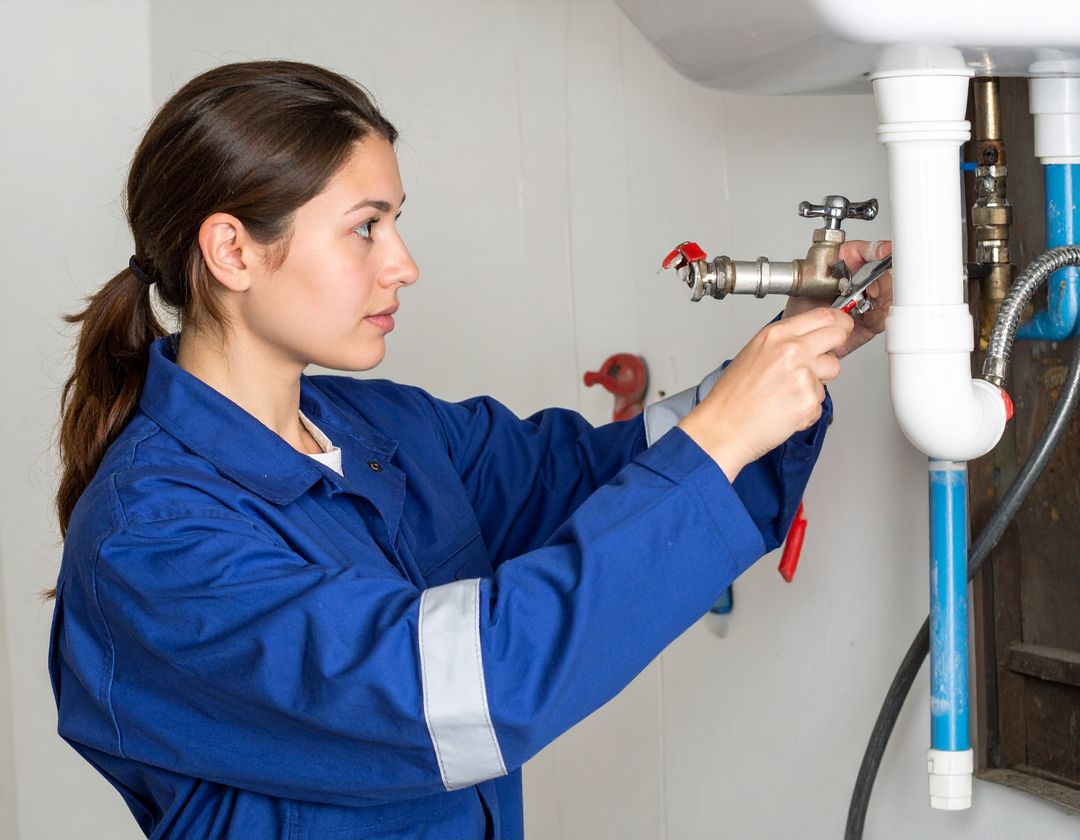


An apprentice plumber installs, repairs, and maintains water supply systems, drainage networks, and gas lines in residential and commercial buildings, working under licensed professionals who teach the technical skills and safety knowledge required for licensure. The role combines physical labor with problem-solving, and you don't need trade school or prior hands-on experience to get started. Employers expect to train new apprentices on the job, and what they care about most is reliability, a willingness to learn, and showing up consistently. If you're exploring the field, the CourseCareers Plumbing Course teaches foundational systems, safety protocols, and code fundamentals so you can walk onto a job site with confidence. For more on entering the trade without a degree, see How to Start a Plumbing Career Without Experience. This guide covers what apprentices do daily, what the role actually requires, and how to build the foundation for a long-term plumbing career.
Apprentice plumbers spend most of their time installing and assembling pipe systems under the direction of journeymen or master plumbers who assign tasks based on skill level and project phase. You might start your morning measuring and cutting PVC pipe for a residential drain system, then move to threading galvanized steel for a commercial water supply line, and finish the day pressure-testing copper connections you soldered earlier in the week. The work follows the construction timeline: rough-in phases happen before walls go up, requiring you to install drainage, supply, and vent pipes according to approved drawings, while finish work happens after drywall and includes mounting toilets, sinks, water heaters, and other fixtures. Between installations, you're learning to read isometric drawings that show three-dimensional pipe layouts, calculating drainage fixture units (DFUs) to size waste lines correctly, and memorizing local code requirements. Physical tasks dominate the day, but the mental work matters just as much since a single miscalculation can cause backups or code violations that force expensive rework.
Daily Tasks of Plumbing Apprentices: Installs, Repairs, Safety, and Code Basics
| Task | Why It Matters | What Beginners Learn |
|---|---|---|
| Cutting and fitting pipe | Pipes must connect precisely to hold pressure and drain correctly | Material differences, joining methods |
| Reading isometric drawings | Installations must match approved plans | How 3D pipe layouts translate to real buildings |
| Following OSHA safety protocols | Plumbing involves tools, heights, and confined spaces | Ladder safety, PPE use, trench safety |
| Assisting with fixture installs | Finish work requires accuracy for code compliance | Toilet, sink, and water heater connections |
| Pressure testing supply lines | Inspectors require proof of watertight connections | How to use gauges and document results |
| Organizing materials before install | Prep work keeps the job moving efficiently | Pipe types, fittings, hangers, and cleanouts |
Apprentices handle pipe installation across multiple materials, which means you're constantly switching between PVC for drainage, PEX or copper for water supply, and sometimes cast iron for commercial waste stacks, each requiring different joining methods like solvent welding, crimping, soldering, or threading. You're responsible for supporting licensed plumbers during complex tasks like installing water heaters, which involves connecting supply lines, installing temperature-pressure relief valves, setting up expansion tanks, and sometimes configuring recirculation loops. Another core responsibility involves maintaining job site safety by following OSHA protocols for ladder use, trench shoring, and personal protective equipment, since plumbing work exposes you to confined spaces, sharp tools, heavy materials, and sometimes hazardous gases. You also prepare materials by measuring, cutting, and organizing pipes, fittings, hangers, and cleanouts before installation begins. Documentation falls on apprentices too since you're often marking where fixtures will mount, noting which valves control which zones, and recording test results when inspectors require proof that installations meet code.
The responsibilities above reflect the full scope of the role, but the daily reality for most beginners is simpler: show up, follow instructions, stay safe, and learn the system. Entry-level apprentices focus on material prep, pipe cutting, and assisting with rough-in installs while licensed plumbers handle design decisions, permit pulls, and inspections. As your skills and reliability become clear, supervisors assign more complex tasks. The learning curve is built into the job by design, and every company expects to invest time in training new apprentices from the ground up.
Employers hiring plumbing apprentices are not looking for finished tradespeople. They want reliable people they can train. The qualities that consistently get beginners hired are showing up on time, having dependable transportation, being willing to do hard physical work, and demonstrating that you take safety seriously. Knowing basic plumbing terminology and understanding how residential systems are laid out puts you ahead of most applicants. Employers also want to see that you can pass a drug test and that you'll stay on the job long enough to make the training investment worthwhile. Being able to speak clearly about why you want to work in the trade, and what you've done to prepare, signals the kind of professionalism that builds trust from day one.
Residential apprentices work on single-family homes, townhouses, and small apartment buildings where systems are simpler and projects move faster, giving you broad exposure to complete installations but less specialization in any single system type. Commercial apprentices handle larger buildings like offices, schools, and hospitals where plumbing systems involve more fixtures, higher water demands, and specialized equipment like grease traps, backflow preventers, and medical gas lines that require additional certifications. Service plumbing pulls apprentices into existing buildings to diagnose leaks, replace corroded pipes, or retrofit outdated systems, which teaches troubleshooting skills and customer interaction but offers less repetition of new-construction techniques. New construction keeps you on predictable schedules with repetitive tasks that build muscle memory quickly, while remodel work forces you to adapt when you discover old galvanized pipes or drainage routes that don't match any drawing. Union apprenticeships typically offer structured training programs with classroom hours and guaranteed wage progression, while non-union positions provide more flexibility but may require seeking formal education independently.
Many beginners assume you need hands-on practice before getting hired, but that's not how the trade works. Employers expect to train new apprentices on the job, and plumbing techniques vary enough by region and company that prior experience is often less valuable than a good attitude and a willingness to learn. Another misconception is that apprentices just hand tools to licensed plumbers and clean up debris, when in reality you're performing real installation work from day one under supervision that gradually decreases as you prove competence. Trade school is not a requirement to start. Apprenticeships provide paid, on-the-job training that teaches the same skills while you're earning a paycheck, making trade school an unnecessary step for most people entering the field. There's also a belief that plumbing is simple manual labor with no technical dimension, but the role consistently requires applying physics concepts, reading code books, and sizing systems correctly for the building type and fixture load.
Being a hands-on problem-solver matters more than anything else because plumbing constantly presents situations where standard approaches don't fit and you need to figure out how to route pipes around obstacles, adapt connections between mismatched materials, or diagnose why a drain isn't flowing despite appearing correctly installed. Strong work ethic separates apprentices who advance quickly from those who stall at entry level, since the job demands showing up consistently, staying focused during repetitive tasks, and pushing through physically demanding days. Attention to detail determines whether your work passes inspection on the first try or gets red-tagged for corrections, because plumbing codes specify exact requirements for everything from cleanout placement to vent pipe angles. Reliable transportation is required since job sites change frequently and start times are early. The ability to pass a drug test is standard across the industry because plumbing work involves operating power tools, working at heights, and accessing occupied buildings. For a deeper dive, read Core Skills Every Plumbing Apprentice Needs to Get Hired.
Pipe cutters, threaders, and saws handle material preparation across different pipe types, with wheel cutters for copper and PEX, ratcheting threaders for galvanized steel, and reciprocating saws for cutting cast iron or PVC in tight spaces. Soldering torches and propane tanks let you join copper pipes by heating fittings until solder melts and flows into the joint, creating watertight connections that require practice to master. PEX crimping and expansion tools create connections for flexible plastic tubing that's increasingly common in residential construction because it installs faster than copper, resists freezing better, and costs less while meeting the same pressure requirements. Levels, tape measures, and marking tools ensure accurate installation since plumbing systems depend on precise slopes for drainage, exact measurements for fixture placement, and clear markings that help inspectors verify compliance. Pressure gauges and test equipment verify that water supply lines hold specified pressures without leaking and that drainage systems flow correctly before inspectors approve the installation and builders close up walls.
Apprentice plumbers solve the fundamental problem of delivering clean water to fixtures and appliances while removing waste and preventing contamination from entering drinking water supplies, which requires understanding how backflow prevention, air gaps, and proper venting keep sewage gases and dirty water from moving backward through the system. They address the challenge of routing pipes through buildings that contain structural members, electrical conduits, and HVAC ducts, which demands spatial reasoning to find paths that don't weaken framing or violate clearance requirements. Another problem involves matching plumbing installations to architectural designs and building codes simultaneously, since fixtures need to land where drawings show them while also meeting code requirements for trap distances, vent sizing, and accessibility standards. The role also solves scheduling coordination problems on construction sites where plumbers must complete rough-in work before drywallers close walls but can't start until electricians and framers finish their phases, requiring communication and flexibility to adapt when delays push back your installation window.
Apprentices report directly to journeymen or master plumbers who assign daily tasks, demonstrate proper techniques, and verify work quality before moving on to the next phase, creating a clear teaching relationship where your supervisor's license and reputation depend on your ability to follow instructions and execute installations correctly. You rely on project managers and contractors to provide accurate drawings, deliver materials on schedule, and coordinate access to job sites, while they depend on you to flag problems early when pipe routes conflict with structural elements or when specified materials won't work with existing conditions. The relationship with building inspectors shapes your daily work since they verify code compliance at multiple stages, requiring you to understand what they'll check, document test results they'll request, and correct any violations before they authorize the next construction phase. Electricians, HVAC technicians, and framers all share the same wall cavities and ceiling spaces where you're routing pipes, so coordination determines whether utilities install smoothly or create conflicts that force expensive rework.
Starting as an apprentice plumber pays around $43,000 per year while you're learning the trade under licensed supervision and working toward the experience hours required to test for your journeyman license. Moving into a journeyman role after completing your apprenticeship and passing the licensing exam typically raises your earnings to $50,000 to $75,000 annually as you take on more complex installations, supervise newer apprentices, and work with less direct oversight on commercial and residential projects. Earning a master plumber license after additional years of experience and another exam opens doors to $75,000 to $110,000 per year positions where you design plumbing systems, pull permits, and oversee entire projects. Late-career advancement can take multiple directions, with plumbing supervisors earning $90,000 to $120,000 managing crews, project managers making $100,000 to $150,000 handling scheduling and budgets, and directors of operations commanding $200,000 or more for overseeing company-wide operations. With experience, many plumbers start their own business, gaining greater control over their schedule, income, and long-term growth.
People who enjoy hands-on problem-solving where every building presents unique challenges and you're constantly figuring out how to make systems work within real physical constraints tend to find plumbing more satisfying than repetitive assembly-line manufacturing. Those with a strong work ethic who take pride in doing solid work and showing up consistently fit well in an industry that values reliability over credentials, since employers care more about whether you arrive on time and complete tasks correctly than where you went to school. Individuals with attention to detail who naturally notice when something looks wrong or doesn't match specifications catch installation errors before they become expensive problems that require ripping out walls and redoing work that failed inspection. Having reliable transportation and the ability to pass drug tests are baseline requirements rather than preferences, since job sites change locations frequently and safety regulations mandate sobriety when operating power tools or working in occupied buildings.
Most beginners piece together plumbing knowledge in fragments before landing their first role. Some watch YouTube videos about specific tasks like soldering copper or installing PEX, which teaches isolated techniques without explaining how those skills fit into complete installations or why codes require particular materials and methods. Others read general career articles that describe the field without breaking down daily workflows, explaining how apprenticeships progress, or showing what technical knowledge you'll actually need on a job site. Some people try home repairs or volunteer for renovation projects, which builds confidence with basic tasks but often reinforces habits that licensed plumbers later need to correct. A more efficient path is structured training that covers plumbing systems, safety protocols, and code fundamentals in a logical sequence before you start applying, so you arrive knowing the terminology, understanding how systems connect, and ready to learn faster once you're on the job.
The CourseCareers Plumbing Course trains beginners to become job-ready plumbing apprentices by teaching the full residential and commercial plumbing process, from foundational systems through installation, safety, and code fundamentals, using lessons and exercises that build core competencies in water distribution, sanitary drainage, venting, materials, code interpretation, fixture installation, and professional readiness. Most graduates complete the course in one to three months, depending on their schedule and study commitment, with no additional materials, tools, or readings required. Immediately after enrolling, you receive access to an optional customized study plan, the CourseCareers student Discord community, the Coura AI learning assistant, a built-in note-taking tool, optional accountability texts, short professional networking activities, and affordable add-on coaching sessions with plumbers currently working in the industry. After completing all lessons and exercises, you take a final exam that unlocks the Career Launchpad section, which teaches you how to present yourself professionally, connect with local employers, and pursue apprentice and helper opportunities using targeted, relationship-based outreach rather than mass-applying to hundreds of roles.
Apprentice plumbers build the foundation for long-term careers in a skilled trade that combines physical work with technical problem-solving, requiring you to master multiple materials, understand complex codes, and develop the reliability that employers value above everything else. Paid apprenticeships and helper roles are the normal starting point in this trade, and you don't need prior experience or a trade school certificate to land one. Knowing what the role actually involves helps you make informed decisions about whether the combination of manual labor, learning curve, and income potential matches your strengths and career goals.
Ready to get started? Watch the free introduction course to learn what an apprentice plumber is, how to break in without a degree, and what the CourseCareers Plumbing Course covers.
Do you need hands-on experience before becoming an apprentice plumber? No. Employers expect to train new apprentices on the job since plumbing techniques vary by company and region. They care more about reliability, willingness to learn, and showing up consistently than prior experience with tools or installations.
What's the difference between an apprentice and a helper? Apprentices are formally learning the trade under licensed supervision and working toward their own license, performing real installation work that increases in complexity as skills develop. Helpers handle material prep and cleanup with less structured learning and no clear path to licensure.
How long does it take to become a licensed plumber after starting as an apprentice? Most states require 4,000 to 10,000 hours of documented work experience under licensed supervision before you can test for your journeyman license, which typically takes two to five years depending on whether you work full-time and how your state structures apprenticeship requirements.
Can apprentice plumbers work on both residential and commercial projects? Yes, though some apprentices specialize in one sector. Residential work exposes you to complete installations on smaller buildings, while commercial projects involve larger systems, more fixtures, and specialized equipment that require stricter code compliance and inspection protocols.
What's the most physically demanding part of being an apprentice plumber? Carrying materials like water heaters, cast-iron pipes, and toolboxes up stairs or ladders, combined with working in cramped crawl spaces, hot attics, and uncomfortable positions for extended periods while maintaining precision for measurements and installations.
Can you become a plumbing apprentice without trade school? Yes. Trade school is not required to start a plumbing career. Most apprentices and helpers get hired based on reliability, work ethic, and willingness to learn. Employers provide on-the-job training, and paid apprenticeships are the standard entry point into the trade.
What do employers look for in plumbing apprentices? Employers prioritize dependability, a willingness to do physical work, reliable transportation, and the ability to pass a drug test. Knowing basic plumbing terminology and understanding how residential systems are laid out gives you an edge, but attitude and reliability matter most.
Bureau of Labor Statistics, Occupational Outlook Handbook: Plumbers, Pipefitters, and Steamfitters, https://www.bls.gov/ooh/construction-and-extraction/plumbers-pipefitters-and-steamfitters.htm, 2024 International Code Council, International Plumbing Code, https://www.iccsafe.org/products-and-services/i-codes/2024-i-codes/ipc/, 2024 OSHA, Construction Industry Safety and Health Standards, https://www.osha.gov/laws-regs/regulations/standardnumber/1926, 2024