Congrats on being referred to CourseCareers! Find your next career path now with no upfront cost.

100% Scholarships Available. Open to Everyone.
Learn More

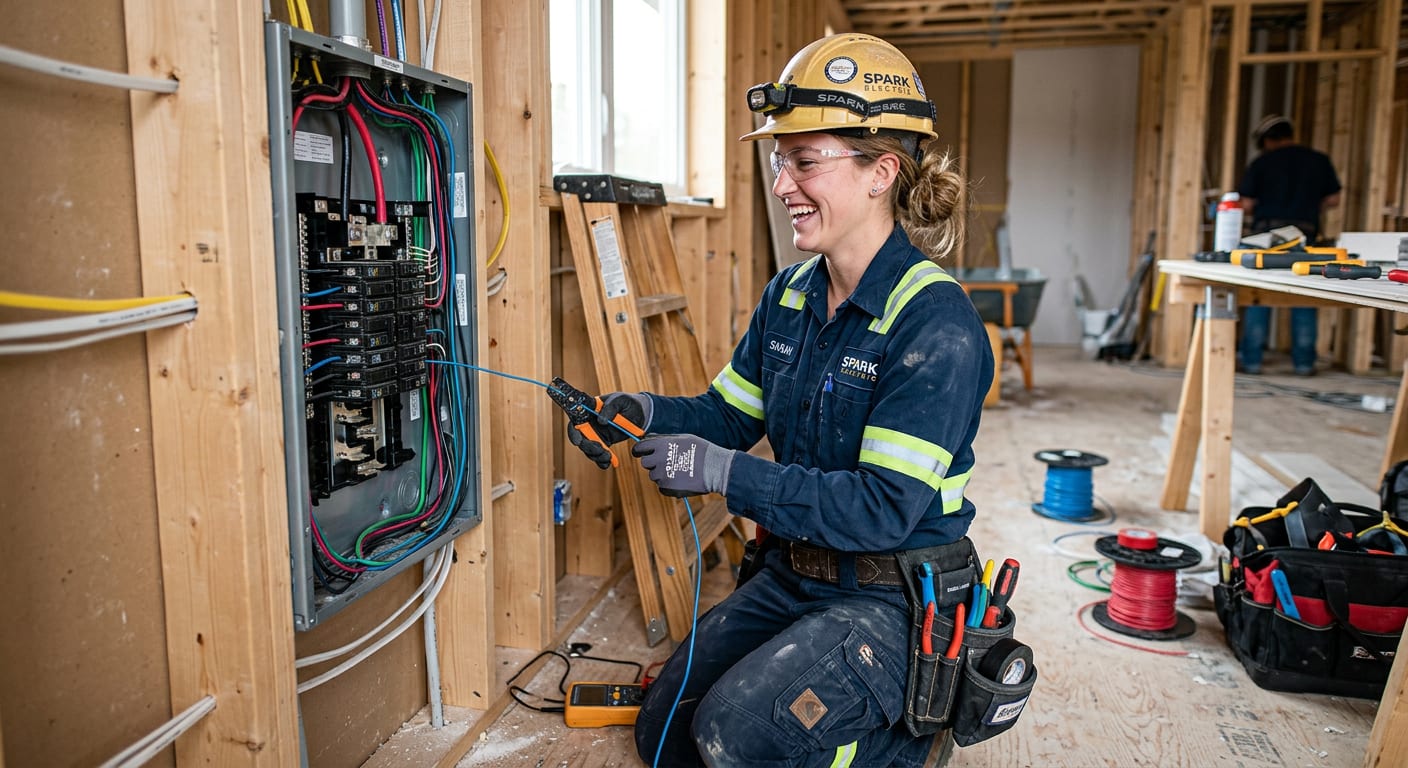


Most people planning to enter the electrical trade assume the path is obvious: enroll in trade school, wait it out, and start applying. That assumption costs real time and real money. Job readiness in the electrical trade is not defined by a diploma. Employers screening entry-level apprentice candidates care about three things: whether you understand job-site safety, whether you recognize the tools and materials on a real crew, and whether you can follow directions without creating a hazard. The CourseCareers Electrician Course trains beginners to become job-ready electrical apprentices by teaching the foundational theory, safety, and practical knowledge required to start in the trade, and most graduates finish in 1 to 3 months. This article compares three preparation paths: trade school, registered apprenticeship programs, and online prep. The comparison focuses on time to readiness, skills gained, and the hiring signals that actually move applications forward.
Electrical contractors are not running academic reviews when they screen entry-level applicants. They are asking a faster, more practical question: Is this person safe, trainable, and ready to show up? Three signals determine whether a candidate gets a callback: skill readiness (can they perform the basic tasks the role requires), tool familiarity (do they recognize what is in front of them on a job site), and proof of preparation (can they demonstrate that knowledge during a conversation with a foreman). Hiring managers typically prioritize demonstrated competence over credentials alone at the entry level. Understanding which preparation path builds those three signals fastest is the entire point of this comparison.
Skill readiness for entry-level electrical work means understanding safety protocols, basic electrical theory, and fundamental wiring concepts well enough to follow instructions and avoid creating hazards on day one. Employers are not expecting new apprentices to arrive as journeymen. They expect a candidate to know what lockout/tagout means, to understand the difference between series and parallel circuits, and to recognize why arc-flash protection matters before anyone hands them a task. Candidates who walk in with that foundation learn faster on the job, require less remedial explanation from the foreman, and give contractors a concrete reason to invest training time in them rather than starting from zero.
Tool familiarity means a candidate can identify and describe the hand tools, power tools, meters, and testers used in apprentice electrical work without needing a tutorial. Proof signals in the trades are more direct than in white-collar fields. There is no portfolio to build and no GitHub to link. The proof is whether a candidate can speak clearly about safety, NEC basics, and conduit bending when a foreman asks a direct question during a walkthrough or informal interview. Candidates who arrive with that vocabulary and baseline knowledge stand out immediately, because the majority of applicants show up with none of it and expect to be trained on concepts they could have learned beforehand.
Electrical trade school refers to formal vocational or community college programs that combine classroom instruction with structured lab time to teach electrical theory, code fundamentals, and basic wiring skills. Programs are offered through community colleges, vocational schools, and technical institutes across the country. Trade school is the option most people default to when they decide to enter the electrical field, largely because it is the most visible and the most socially familiar path available. It carries a recognized credential, a structured timeline, and an instructor-led environment. Whether that structure is worth the time and cost depends entirely on what a candidate needs and how fast they need it.
Trade school programs cover electrical theory, NEC code fundamentals, blueprint reading, and lab-based wiring exercises in a sequenced curriculum designed for broad educational depth. The focus is academic before it is practical. Students learn the principles behind the work, which builds a solid conceptual foundation. The depth of hands-on application varies significantly between programs. Some schools provide meaningful lab time with real tools and materials; others lean heavily on classroom instruction with limited exposure to the job-site conditions a new apprentice actually encounters. The credential a trade school produces is real, but the gap between classroom knowledge and job-site confidence is something candidates need to close on their own.
Most electrical certificate programs run between one and two years. Associate degree programs in electrical technology typically require two years of full-time enrollment, and accelerated certificate programs can sometimes be completed in two to three semesters. That timeline means a person who enrolls today is, at minimum, twelve to twenty-four months away from applying for entry-level positions. Trade school tuition varies widely by institution and adds a financial cost on top of the time commitment. For a candidate who needs to start working sooner, that delay has direct financial consequences that a credential cannot offset.
Trade school credentials signal structured preparation, persistence, and a baseline of theoretical knowledge that some employers find reassuring. Candidates who completed an accredited electrical program have demonstrated the ability to follow a curriculum, pass formal assessments, and commit to a program over time. In regions where union apprenticeship programs like the IBEW run competitive application processes, trade school coursework can strengthen a candidate's application by showing prior commitment to the field. For larger contractors with formal onboarding processes, the credential carries enough weight to move an application forward past initial screening.
Trade school's core limitation is time, and time in this trade is income. A program that takes one to two years to complete delays workforce entry by a meaningful margin, and during that window a candidate is not earning trade wages. The curriculum is built for breadth rather than speed, which means not every hour in class translates directly into the readiness signals that entry-level employers use to screen applicants. Tuition adds financial pressure that compounds the delay. For someone motivated to start working in the electrical trade quickly, trade school is the slowest route from zero to a first paycheck.
A registered electrical apprenticeship is a paid, multi-year training program that combines supervised on-the-job field experience with related technical instruction in a classroom setting. Programs are administered through union organizations like the International Brotherhood of Electrical Workers (IBEW) or through non-union contractors and joint apprenticeship training committees. The defining feature of a registered apprenticeship is that the training happens while you are employed and earning wages. Most registered programs require four to five years to complete and culminate in journeyman electrician licensure, the credential that authorizes an electrician to work independently on any job in their licensed state.
Apprenticeships teach the full scope of electrical work through years of direct field experience supervised by journeymen and foremen. Apprentices develop proficiency in installation, conduit work, wiring, NEC code compliance, system troubleshooting, and eventually crew leadership over the course of the program. The related technical instruction component covers theory, code, and safety in structured classroom sessions, typically scheduled in the evenings or on designated training days separate from field hours. The IBEW five-year apprenticeship, for example, requires a minimum of 8,000 on-the-job training hours alongside 900 or more hours of related instruction. No other preparation path produces more experienced, more credentialed electricians over time.
Most registered apprenticeship programs in the electrical trade run four to five years. IBEW programs are structured as five-year programs with apprentices advancing through wage steps tied to their accumulated hours and assessment results. State and federally registered programs must meet minimum hour requirements set by the Department of Labor, which ensures a consistent and rigorous standard across programs. The apprenticeship delivers the most comprehensive trade career preparation available, but it is the longest timeline on this list. Union programs also have application windows, waiting periods, and selection processes, which means an interested candidate may not be able to start immediately even after applying.
The registered apprenticeship is the gold standard for electrical trade career development because it delivers paid training, progressive wage increases, and journeyman licensure at the end. Graduates of registered programs earn credentials recognized in every state, carry strong long-term earning potential, and often receive union benefits including health coverage and pension contributions. The paid training model eliminates the financial sacrifice required by full-time school enrollment. The years of supervised field experience produce electricians with a level of practical skill that no classroom program, lab, or online course can replicate. For anyone committed to making the electrical trade a long-term career, the apprenticeship remains the most thorough preparation available.
The apprenticeship requires being hired before any training begins. A candidate cannot simply decide to start one; they must apply, qualify, and be selected by a union program or a contractor willing to take on an apprentice. IBEW programs in competitive markets have formal application periods and multi-step selection processes with no guaranteed acceptance. Non-union opportunities depend on local market conditions and individual contractor decisions. The four to five year commitment is also a significant factor for someone who wants to start earning trade wages quickly rather than committing to a structured multi-year program. Getting into an apprenticeship is the first hurdle, and it is one many motivated candidates cannot clear immediately.
Online electrical prep programs are self-paced training programs designed to build the foundational safety knowledge, electrical theory, and practical terminology required to enter the trade at the apprentice or entry-level helper position. These programs are not designed to replace apprenticeships or deliver hands-on field training. Their purpose is to accelerate job readiness for candidates who want to apply for entry-level positions sooner by arriving with the baseline knowledge employers expect a prepared candidate to already have. The CourseCareers Electrician Course trains beginners to become job-ready electrical apprentices by teaching foundational theory, safety, and practical knowledge required to start in the trade, and it does it at a pace that gets candidates applying in months rather than years.
The CourseCareers Electrician Course builds competency across every knowledge domain entry-level employers expect an apprentice to have studied before arriving. Students develop understanding of electrical and job-site safety (OSHA Fatal Four, lockout/tagout, PPE, and arc-flash protection), electrical theory and circuitry (current, voltage, resistance, Ohm's Law, and series, parallel, and combination circuits), National Electrical Code organization and navigation, conduit bending fundamentals using a hand bender, hand and power tools used by apprentice electricians, basic electrical materials and wiring (boxes, conduit, MC and Romex cable, receptacles, GFCIs, and switches), and blueprint reading. The course includes a Career Launchpad section, which is a structured job-search guidance program that teaches candidates how to connect with local employers, present themselves professionally, and move from course completion to real job opportunities.
Most graduates finish the CourseCareers Electrician Course in 1 to 3 months, depending on their schedule and study commitment. The course is entirely self-paced, so a candidate who dedicates focused hours each week moves through it faster than someone studying around a demanding schedule. Compared to trade school at one to two years and registered apprenticeships at four to five years, online prep delivers job-ready foundational knowledge in a fraction of the time. That speed advantage is the core strategic reason to choose this path. Candidates who want to start applying for apprentice and helper positions within the next few months rather than the next few years have one realistic option for building that readiness quickly.
Online prep's primary strength is speed to the three hiring signals that entry-level electrical employers actually use: safety awareness, basic electrical knowledge, and the ability to speak clearly about the work. The CourseCareers Electrician Course costs $499, with a payment plan of four payments of $150 every two weeks. Students have 14 days to switch courses or receive a refund, as long as the final exam hasn't been taken. At a starting salary of $43,000, graduates can earn back their $499 CourseCareers investment in about three workdays. Immediately after enrolling, students receive access to an optional customized study plan, the CourseCareers student Discord community, the Coura AI learning assistant (which answers questions about lessons or the broader career), a built-in note-taking and study-guide tool, optional accountability texts, short professional networking activities, and affordable add-on one-on-one coaching sessions with industry professionals currently working as electricians.
Online prep does not deliver field hours, hands-on installation experience, or journeyman licensure, and it is not designed to. It prepares candidates to enter the trade at the apprentice or helper level, not to bypass the apprenticeship's years of supervised development. Candidates who complete the CourseCareers Electrician Course still need to work through a registered apprenticeship or on-the-job training to advance toward journeyman status and the higher wage tiers that come with it. The program also requires genuine self-discipline. There are no fixed class times, no instructor taking attendance, and no external accountability by default. Motivated candidates who engage with the material consistently extract real value. Candidates who treat it passively will not.
Speed, depth, and access to training are the three variables that separate these paths. Trade school delivers structured academic preparation over one to two years with a recognized credential at the end. Registered apprenticeship programs deliver the most comprehensive trade development available over four to five years, with paid wages throughout and journeyman licensure at completion. Online prep delivers job-ready foundational knowledge in one to three months, positioning candidates to apply for entry-level apprentice and helper roles without the multi-year delay of the other two options. For candidates whose primary goal is getting to a first paid position in the trade as quickly as possible, online prep is the fastest path by a significant margin.
Most contractors and foremen evaluating entry-level applicants are running a practical screen, not a credential audit. They want to know if a candidate is safe to put on a job site, coachable enough to develop quickly, and reliable enough to show up consistently. A candidate who can speak clearly about OSHA protocols, identify the tools used in apprentice work, and demonstrate awareness of basic electrical theory is a strong applicant regardless of which preparation path produced that knowledge. Each path builds a different type of credibility, and understanding which type your target employer values shapes which path makes sense for where you are right now.
Trade school produces candidates with academic credentials and theoretical depth, which appeals to employers with formal onboarding programs or structured evaluation processes. Registered apprenticeship programs produce the most experienced candidates over time, but require being hired into the program first, meaning the apprenticeship itself is the first job. Online prep produces candidates who can speak confidently about safety, code fundamentals, and job-site tools during a direct conversation with a contractor or foreman, which addresses the readiness signals that matter most at the entry level. The path that best supports the hiring signals your target employers use is the path that moves your application forward fastest.
The right preparation path depends on your timeline, your financial situation, and what you need to accomplish in the next six to twenty-four months. All three options can lead to a successful electrician career. The question is which one gets you to a first paid position in the timeframe that works for your life.
Trade school is the right choice if you want a structured, instructor-led environment with lab components and a formal credential that strengthens applications to competitive union apprenticeship programs. It also makes sense if you are pursuing advanced roles that require formal education credit hours at later stages of your career, or if you simply prefer the paced, classroom-based format over self-directed learning. For candidates who are not under financial pressure to start working quickly and who value the recognition a formal credential carries, trade school provides a legitimate and well-worn path into the trade.
A registered apprenticeship makes the most sense if your goal is long-term career development in the electrical trade and you are ready to commit to a four to five year structured program. It is the best path for anyone who wants to earn wages while training, progress through formal wage steps, and reach journeyman licensure. The IBEW and similar union programs carry credentials recognized everywhere in the trade, and the practical skill developed over years of supervised field work is irreplaceable. If you can gain acceptance into a registered program, that investment compounds across a full trade career.
Online prep makes sense if you want to start applying for entry-level apprentice and helper roles within the next few months rather than the next one to two years. The CourseCareers Electrician Course gives you the safety knowledge, electrical theory, code basics, and tool familiarity to walk into a conversation with a local contractor and demonstrate that you have prepared. It is the right fit if you are motivated and self-directed, want to enter the trade without taking on trade school debt, or cannot wait for a union apprenticeship application window to open. It does not replace the apprenticeship, but it gets you into one, or into a helper role, faster than any other preparation path.
The most direct route to a first paid position in the electrical trade runs through foundational knowledge, not credentials. Contractors and apprenticeship programs hiring at the entry level care most about safety awareness, basic electrical knowledge, and a candidate who is reliable and ready to absorb training on the job. A candidate who arrives knowing OSHA protocols, Ohm's Law, NEC navigation basics, and how to identify apprentice-level tools has already separated themselves from the majority of applicants. Online prep delivers that foundation in 1 to 3 months. The Career Launchpad section of the CourseCareers Electrician Course teaches candidates how to reach out to local employers, present themselves professionally, and turn that preparation into actual opportunities.
The career trajectory from that starting point is real and well-documented. Entry-level apprentice electricians typically start at around $43,000 per year. With experience and progression, journeyman electricians earn $60,000 to $90,000 per year. Foremen and general foremen reach $90,000 to $150,000 per year. With enough experience and drive, many electricians start their own business, gaining greater control over their schedule, income, and long-term growth, with business owners earning $100,000 to $500,000 or more. The trade rewards people who show up, stay consistent, and keep developing skills. The first step is getting in.
Watch the free introduction course to learn more about what an electrician is, how to break into the electrical trade without a degree, and what the CourseCareers Electrician Course covers.
Which preparation path gets you job-ready as an electrician the fastest? Online prep delivers foundational job readiness the fastest. The CourseCareers Electrician Course covers safety, electrical theory, NEC basics, conduit fundamentals, and trade tools, and most graduates finish in 1 to 3 months. Trade school takes 1 to 2 years. Registered apprenticeships take 4 to 5 years and require being hired into a program before training begins. For candidates who want to apply for entry-level apprentice and helper roles quickly, online prep produces the fastest path to a first interview.
Do electrical employers care more about credentials or practical skills at the entry level? Most contractors and foremen hiring entry-level apprentice and helper candidates prioritize trainability, reliability, and basic safety knowledge over formal credentials. Candidates who can demonstrate awareness of OSHA protocols, electrical theory fundamentals, and job-site tool knowledge stand out in hiring conversations. A formal credential can strengthen an application, but it does not replace the readiness signals employers use to evaluate candidates for hands-on trade work.
Do you need trade school to become an electrician? Trade school is not required to start an electrical career. Apprenticeship programs and entry-level helper positions provide paid, on-the-job training, making traditional trade school an unnecessary delay and expense for candidates who want to enter the trade quickly. Online prep programs like the CourseCareers Electrician Course deliver the foundational safety knowledge, electrical theory, and trade terminology needed to apply for and succeed in entry-level roles without a trade school enrollment.
How long does it realistically take to become job-ready for an entry-level electrician role? With online prep, most graduates finish the CourseCareers Electrician Course in 1 to 3 months and are ready to apply for apprentice or helper positions. Trade school programs take 1 to 2 years to complete. Registered apprenticeship programs run 4 to 5 years but begin with paid employment. The shortest realistic timeline to a first paid entry-level position belongs to candidates who use online prep to build foundational readiness and apply directly to local contractors and apprenticeship programs.
What proof signals make entry-level electrician candidates stand out? The most effective proof signals at the entry level are safety knowledge, basic electrical theory, familiarity with trade tools and materials, and the ability to speak clearly about the work during a direct conversation with a foreman or contractor. Candidates who can reference OSHA protocols, describe circuit types, and demonstrate awareness of what apprentice work actually involves give employers a concrete reason to take the application seriously. CourseCareers graduates build all of these signals through the Electrician Course.
Can you become an electrician without a degree? Yes. The electrical trade does not require a college degree at any level. Entry-level apprentice and helper roles are available to candidates who can demonstrate basic safety knowledge, trainability, and reliability. Apprenticeship programs provide the formal pathway to journeyman licensure through on-the-job hours rather than academic credentials. The CourseCareers Electrician Course gives candidates the foundational knowledge to enter the trade confidently without a degree, a trade school enrollment, or prior field experience.
Glossary
Apprentice Electrician: An entry-level worker in the electrical trade enrolled in a formal or informal training program who performs supervised electrical work while building toward journeyman licensure.
Journeyman Electrician: A licensed electrician who has completed a registered apprenticeship and passed a state licensing exam, authorized to perform electrical work independently on any qualifying job site.
Registered Apprenticeship: A formal, multi-year training program approved by the U.S. Department of Labor that combines paid on-the-job experience with related technical instruction and culminates in a nationally recognized credential.
OSHA Fatal Four: The four leading causes of construction worker deaths identified by the Occupational Safety and Health Administration: falls, struck-by incidents, electrocution, and caught-in/between hazards.
Lockout/Tagout (LOTO): A safety procedure that ensures dangerous energy sources are shut off and cannot be restarted before maintenance or electrical work is performed on equipment or systems.
National Electrical Code (NEC): The standard for the safe installation of electrical wiring and equipment in the United States, published by the National Fire Protection Association and adopted by most jurisdictions as law.
Career Launchpad: The final section of every CourseCareers course, which teaches job-search strategies, outreach methods, and professional presentation skills designed to help graduates connect with employers and secure interviews.
Citations