Congrats on being referred to CourseCareers! Find your next career path now with no upfront cost.

100% Scholarships Available. Open to Everyone.
See Scholarship Details

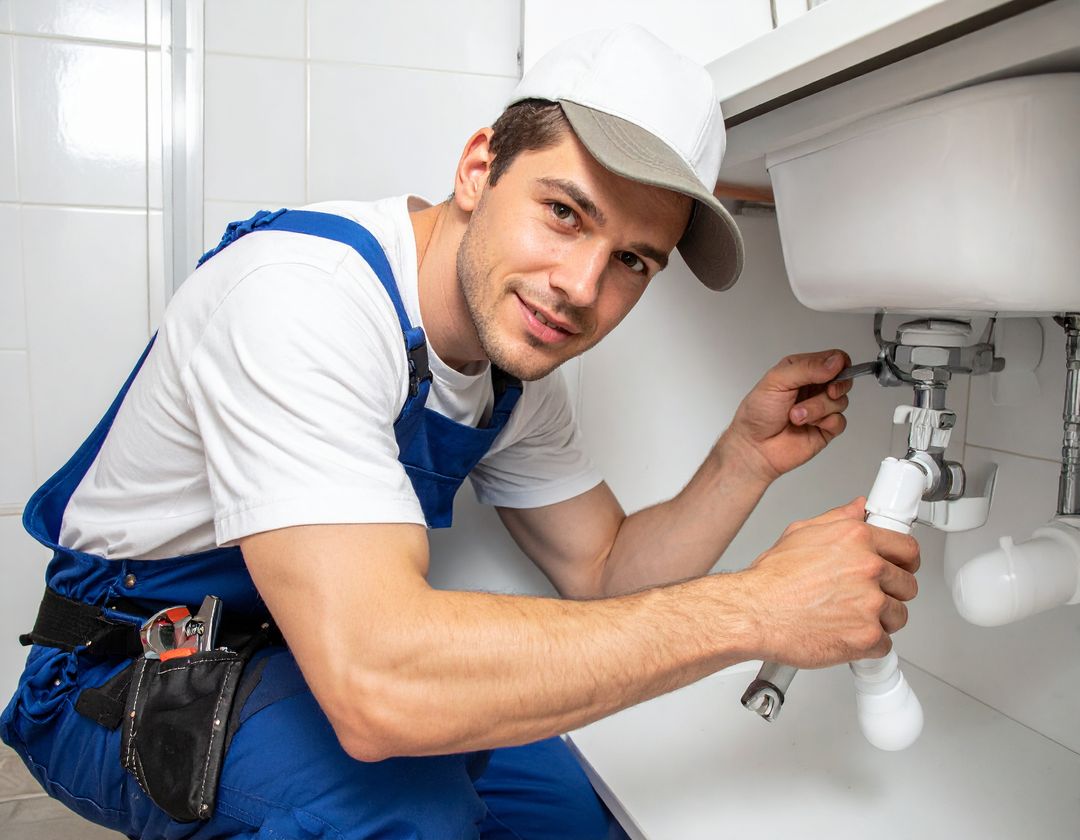


Plumbing is a skilled trade focused on installing, maintaining, and repairing water distribution and drainage systems in homes, businesses, and industrial facilities. The work involves understanding how water moves through buildings, solving problems when systems fail, and ensuring installations meet safety codes. People consider plumbing because it offers stable work that can't be outsourced, requires no college degree, and provides clear paths to higher earnings through experience and certification. Whether plumbing is a good career depends on your interests, physical capabilities, work preferences, and willingness to learn technical skills on the job. The CourseCareers Plumbing Course trains beginners to become job-ready plumbing apprentices through a self-paced online program covering residential and commercial systems, safety protocols, code compliance, and the foundational knowledge employers expect from day one.
Plumbers spend their days diagnosing issues, installing new systems, and maintaining existing ones. A typical day might include replacing a water heater, fixing a drainage backup, installing fixtures in a new home, or repairing a burst pipe. The work happens in crawl spaces, on rooftops, in basements, and anywhere water and waste systems run. You use tools like pipe wrenches, tubing cutters, soldering equipment, and power augers while working with materials including PVC, copper, PEX, and cast iron. The job requires problem-solving because no two buildings are identical and issues rarely present obvious solutions. You interact with homeowners, contractors, inspectors, and other trades throughout the day. Success means completing jobs safely, meeting code requirements, preventing callbacks, and building a reputation for reliability and quality work. Physical stamina matters because you lift heavy materials, work in tight spaces, and spend hours on your feet or kneeling.
Plumbing attracts people seeking stable work with good earning potential and clear advancement paths. The field offers consistent demand because water systems require maintenance regardless of economic conditions, and every building needs functioning plumbing. You solve tangible problems with visible results, which many find satisfying compared to abstract office work. The trade provides variety since each job site presents different challenges, systems, and customer needs. Entry barriers are lower than many careers because you can start earning while learning through apprenticeships rather than spending years and thousands on education before your first paycheck. Many plumbers appreciate the independence that comes with the work, especially those who eventually run their own businesses. The profession rewards skill development, with certifications and specializations opening doors to higher-paying positions in commercial, industrial, or service sectors.
Plumbing involves physical demands that some find difficult long-term. You work in uncomfortable positions, lift heavy materials regularly, and face exposure to sewage, mold, and other unpleasant conditions. Emergency calls happen nights, weekends, and holidays because pipe failures don't wait for convenient timing. The learning curve is steep at the beginning since you must master terminology, materials, codes, and techniques before you become productive. Mistakes can be expensive, causing water damage or code violations that require costly corrections. Some days you face frustrated customers dealing with water emergencies who direct their stress at you. Weather affects outdoor work, with trenching and exterior repairs becoming miserable in extreme cold or heat. Job security is strong overall, but construction slowdowns can reduce available work for plumbers in new construction compared to those in service and repair. You need reliable transportation since job sites change daily and being late damages your reputation with employers.
Successful plumbers combine technical knowledge with practical problem-solving abilities. You must understand water distribution systems, sanitary drainage, venting principles, and how atmospheric pressure affects flow. Material knowledge is essential because you work with PVC, CPVC, PEX, copper, and cast-iron piping, each requiring different connection methods like solvent welding, crimping, soldering, or threading. Reading plumbing drawings and isometric plans helps you visualize systems before installation. Code compliance matters because inspectors check your work against drainage fixture unit calculations, venting requirements, and safety standards. You need spatial reasoning to route pipes through walls and floors efficiently. Physical coordination helps when working in tight spaces or overhead positions. Communication skills matter because you explain problems to customers, coordinate with other trades, and interact with inspectors. Attention to detail prevents costly mistakes like incorrect slopes or improper venting that cause system failures. Time management keeps jobs on schedule and customers satisfied.
Entry-level plumbing apprentices typically start around $43,000 per year while learning the trade through paid, on-the-job training. As you gain experience and obtain journeyman licensing, earnings rise to $50,000 to $75,000 annually, with more complex work and greater independence. Licensed plumbers who specialize in commercial systems or take on project management responsibilities can earn $75,000 to $110,000 or more as their skills deepen and reputation grows. Supervisory roles, leading crews on large projects, or moving into operations management opens paths to $90,000 to $120,000 annually. With experience, many plumbers start their own business, gaining greater control over their schedule, income, and long-term growth, with successful owners earning $100,000 to $600,000 or more depending on business size and market. At a starting salary of $43,000, graduates can earn back their $499 CourseCareers investment in about three workdays.
Plumbing suits people who are hands-on problem-solvers with strong work ethic and attention to detail. You should be physically capable of lifting materials, working in tight or uncomfortable positions, and spending long stretches on your feet. Reliable transportation is essential since job sites change daily and punctuality affects your reputation and job security. Passing a drug test is standard in the industry. If you prefer clean, climate-controlled environments, plumbing might frustrate you since the work often happens in crawl spaces, attics, and unfinished areas. People who thrive in this trade enjoy tangible results, appreciate variety in daily work, and find satisfaction in solving problems that directly help people. You need patience to learn complex systems and codes while working through the apprenticeship period. Pride in doing quality work matters because sloppy installations lead to callbacks, damage, and reputation loss. If you value independence and the possibility of running your own business eventually, plumbing offers clear paths to that goal.
Most beginners approach plumbing through scattered YouTube videos and random online research, hoping to understand systems before applying for jobs. This method leads to disconnected knowledge because tutorials rarely connect to actual code requirements or job-site realities. Some people enroll in expensive trade schools costing $5,000 to $20,000 and lasting six months to two years before they start earning, delaying income while accumulating debt. Others jump straight into cold-calling plumbing companies without understanding terminology or basic systems, which makes them seem unprepared and less hirable compared to applicants who demonstrate foundational knowledge. The traditional path relies on luck and networking rather than structured preparation, leaving many stuck in low-skill jobs while they figure out how to present themselves as trainable apprentices. Without understanding drainage fixture units, venting methods, or pipe materials, beginners struggle to follow conversations with employers or impress during initial interviews, extending their timeline to employment significantly.
The CourseCareers Plumbing Course gives beginners the foundational safety knowledge, technical terminology, and systems understanding that employers expect from apprentice-level hires. You learn residential and commercial plumbing through lessons and exercises covering water distribution, sanitary drainage, venting, OSHA safety requirements, pipe materials like PVC, CPVC, PEX, and copper, plus installation techniques including solvent welding, soldering, and crimping. The course teaches code compliance through drainage fixture unit calculations, venting methods, and drawing interpretation so you can follow plans and understand inspector requirements. You master fixture installation for toilets, water heaters, kitchen appliances, and commercial systems, giving you the vocabulary and conceptual framework to learn faster once hired. Most graduates complete the training in one to three months while studying at their own pace, avoiding the six-month to two-year delay of traditional trade school while paying just $499 instead of $5,000 to $20,000.
Immediately after enrolling, you receive access to an optional customized study plan, the CourseCareers student Discord community, and Coura AI learning assistant, which answers questions about lessons or the broader career. You can use the built-in note-taking and study-guide tool, opt into accountability texts that help keep you motivated and on track, and complete short, simple professional networking activities that help you reach out to professionals, participate in industry discussions, and begin forming connections that can lead to real job opportunities. Affordable add-on coaching sessions with plumbers currently working in the industry are available if you want personalized guidance. After passing the final exam, you receive a certificate of completion showing employers you have mastered the foundational skills necessary to succeed in an entry-level plumbing role.
After passing the final exam, you unlock the Career Launchpad section, which teaches you how to present yourself to employers and turn applications into interviews and offers. You learn how to optimize your resume for plumbing positions, then use proven job-search strategies focused on targeted, relationship-based outreach to local employers rather than mass-applying to hundreds of roles. The guidance includes short, simple activities that help you connect with plumbing companies in your area, demonstrate your foundational knowledge, and stand out as someone ready to learn on the job. You get access to unlimited practice with an AI interviewer, plus affordable add-on coaching with industry professionals who can give feedback on how you present yourself. The Career Launchpad concludes with career-advancement advice to help you grow beyond your first apprentice role through skill development and certification.
Whether plumbing is a good career depends on your interests, physical capabilities, work preferences, and long-term goals. The field offers strong structural advantages including stable demand, earning potential that grows with experience and certification, and paths to business ownership that give you control over your income and schedule. Many people find the work satisfying because it combines problem-solving with tangible results while avoiding the debt and time investment of college. Physical demands and occasional unpleasant conditions are real factors to consider, but the tradeoff is lower entry barriers and faster paths to good earnings compared to degree-requiring fields. If you value hands-on work, appreciate variety in daily tasks, and want to build a skill set that can't be outsourced or automated, plumbing offers a solid foundation. Watch the free introduction course to learn what plumbing is, how to break in without a degree, and what the CourseCareers Plumbing Course covers.
Do I need a degree to become a plumber? No degree is required to start a plumbing career. Apprenticeships and helper positions provide paid, on-the-job training, making traditional trade school an unnecessary delay and expense. Employers care about reliability, work ethic, and trainability more than formal credentials when hiring entry-level apprentices.
Do I need hands-on experience before getting hired? No prior hands-on experience is necessary to start. Employers expect to train new hires on the job since every company uses different methods and materials. Understanding plumbing systems, safety protocols, and terminology before you apply helps you learn faster and make a stronger first impression once hired.
How long does it take to complete plumbing training? Most graduates complete the CourseCareers Plumbing Course in one to three months, depending on their schedule and study commitment. The course is entirely self-paced, so you can go at your own pace. Some people study about one hour per week, others study 20 hours or more.
Is the plumbing job market competitive? Career timelines depend on your commitment level, local market conditions, and how closely you follow CourseCareers' proven job-search strategies. Strong demand exists for reliable plumbers since water systems require constant maintenance, but landing your first role requires demonstrating foundational knowledge and professionalism to local employers.
What should I do before applying for plumbing jobs? Build foundational knowledge of plumbing systems, safety requirements, materials, and code basics so you can follow conversations with employers and understand the work. Make sure you have reliable transportation and can pass a drug test, as these are standard requirements in the industry.
Drainage Fixture Units (DFU): A standardized measurement used in plumbing codes to calculate the load each fixture places on drainage systems, helping determine proper pipe sizing.
PVC (Polyvinyl Chloride): A rigid plastic pipe material commonly used for drainage, waste, and vent systems due to its durability and resistance to corrosion.
CPVC (Chlorinated Polyvinyl Chloride): A plastic pipe material similar to PVC but rated for hot water distribution systems, often used in residential plumbing.
PEX (Cross-Linked Polyethylene): A flexible plastic tubing used for water supply lines, popular in residential construction for its ease of installation and resistance to freezing.
Solvent Welding: A pipe joining method that uses chemical solvents to fuse plastic pipes and fittings together, creating permanent, leak-proof connections.
Venting: The system of pipes that allows air into drainage systems to prevent siphoning and maintain proper water flow, required by plumbing codes.
OSHA (Occupational Safety and Health Administration): The federal agency that sets and enforces workplace safety standards, including requirements for plumbers working in trenches, with ladders, and handling hazardous materials.
Isometric Drawing: A three-dimensional representation of plumbing systems shown in two-dimensional space, used to plan pipe routing and communicate installation details.