Congrats on being referred to CourseCareers! Find your next career path now with no upfront cost.

100% Scholarships Available. Open to Everyone.
Learn More

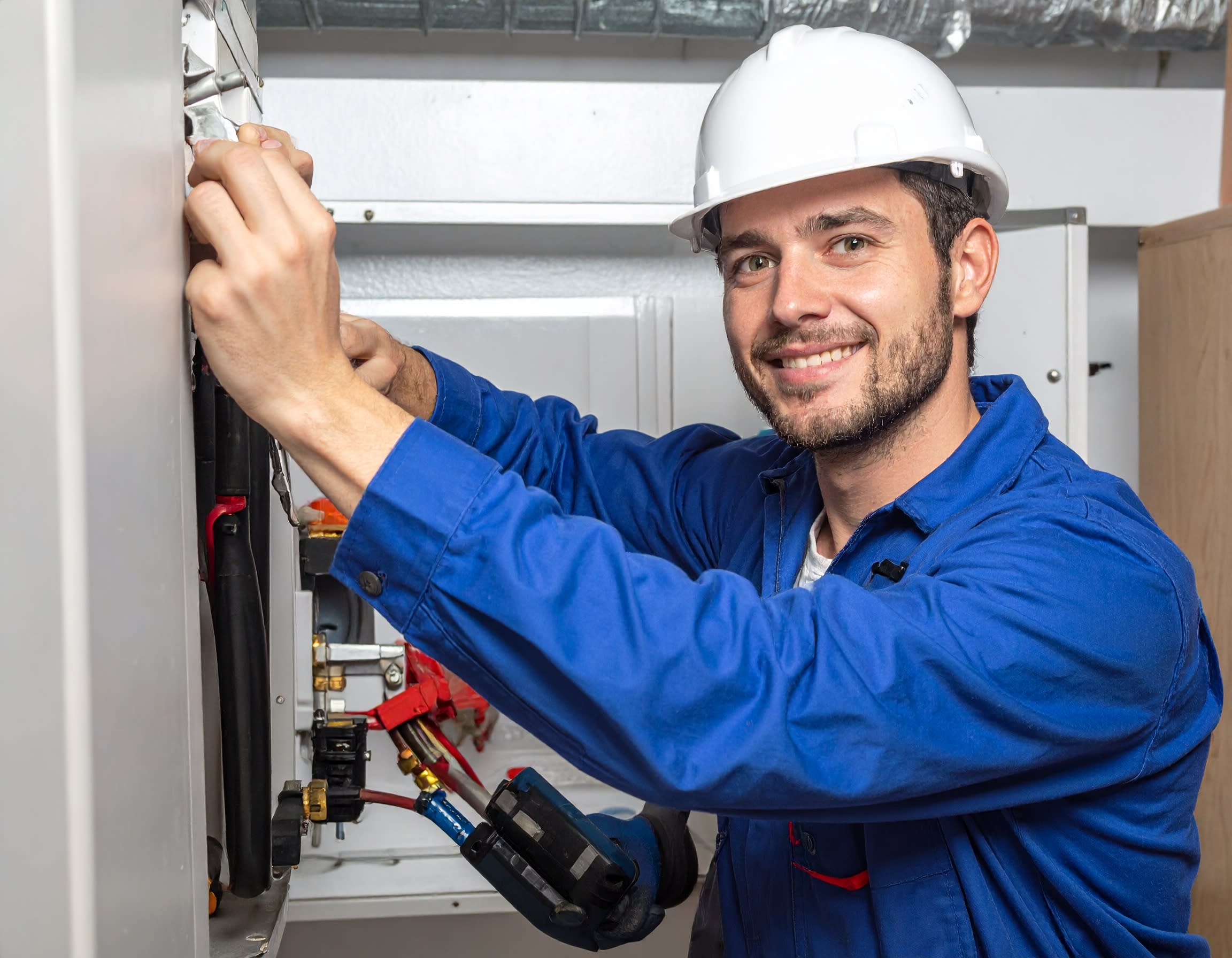


Learning HVAC through the CourseCareers HVAC Course feels different from trade school because you're not sitting in a classroom for months before earning a paycheck. You start with zero experience and work through lessons and exercises at your own pace, building the safety knowledge and technical understanding that local HVAC employers actually care about when hiring apprentices. The course teaches you what compressors, refrigeration cycles, and electrical circuits do, how to work safely around live systems, and how to talk about HVAC work without sounding clueless. If you're exploring what this path looks like from the beginning, How to Start an HVAC Career Without Experience walks through how beginners typically break in. Most graduates complete the course in one to two months, then use the Career Launchpad to connect with local shops that are actively hiring helpers and apprentices. This approach gets you ready to apply for paid, on-the-job training roles without the delay and expense of trade school, which means you start earning while you learn instead of paying tuition while you wait.
You don't need a degree, prior hands-on experience, or trade school enrollment to begin learning HVAC with CourseCareers. The course is designed for absolute beginners who want to understand how HVAC systems work before stepping onto their first jobsite. Most HVAC employers hire entry-level apprentices or helpers based on reliability, trainability, and work ethic rather than expensive certificates. They expect to train you on the job, which means your goal is to show up with enough foundational knowledge to learn quickly and communicate clearly. CourseCareers gives you that foundation by teaching the core terminology, safety standards, and system mechanics that make you a stronger candidate from day one, without the delay and expense of traditional trade school programs.
Starting with zero HVAC knowledge feels less overwhelming than you'd expect because the lessons break everything down into manageable steps. You begin with HVAC fundamentals like heating, cooling, ventilation, and the refrigeration cycle, along with core system types such as split, packaged, ducted, and ductless configurations. Early lessons introduce you to tools and safety protocols, including OSHA-aligned safety culture, personal protective equipment, ladder use, lockout/tagout procedures, and proper handling of electrical, chemical, and compressed-gas hazards. These foundational concepts set you up to understand how real HVAC systems operate, maintain stable indoor climates, and handle the energy transfer required to heat or cool a building. By the time you finish the first few lessons, you'll recognize the language HVAC technicians use on jobsites and understand the logic behind common service calls.
Trade school isn't required to start an HVAC career, and for most beginners, skipping it is the smarter move. Most employers train apprentices and helpers directly on the job. They care about hiring dependable people who show up on time, follow safety rules, and take pride in doing solid work. Trade school programs cost thousands of dollars and delay your entry into the workforce by months or even years, which means you're paying tuition instead of earning a paycheck. CourseCareers gives you a faster, more affordable path by teaching the foundational safety knowledge, terminology, and system understanding that make you stand out when applying for paid apprentice or helper roles.
How to Get a Job in the Trades Without Trade School breaks down how the apprenticeship model actually works and why most entry-level employers prioritize attitude and reliability over classroom credentials.
Online HVAC learning through CourseCareers is built around knowledge acquisition, not hands-on practice. Trade school programs require you to be present in a classroom or lab on a fixed schedule, often for a year or more, before you ever apply for a paying job. CourseCareers compresses the knowledge-building phase into one to two months of self-paced study, then sends you directly into the job market with a structured approach to finding apprentice and helper roles. You don't graduate from CourseCareers ready to pull permits or service systems independently. You graduate ready to start a paid apprenticeship where you'll build those hands-on skills under the supervision of working technicians. That distinction matters because it means you get paid to develop real field skills instead of paying tuition to simulate them.
A typical week of HVAC study with CourseCareers looks different for everyone because the course is entirely self-paced. Some students study one hour per week and move through lessons gradually alongside a full-time job or family responsibilities. Others put in twenty hours or more and finish the course in a matter of weeks. The optional customized study plan breaks your goals into manageable weekly targets based on how much time you have available, so you're never guessing what to work on next. Each week, you're making measurable progress through the Skills Training section, completing lessons and exercises on safety, electrical systems, refrigeration theory, or system components, and checking off concepts that HVAC employers expect entry-level apprentices to know. The structure keeps you moving forward without requiring a rigid class schedule.
The Skills Training section teaches you the safety protocols, technical concepts, and system mechanics that HVAC technicians use every day, all through lessons and exercises that you complete at your own pace. You learn how to identify and work safely around electrical hazards, how refrigeration cycles move heat from one place to another, and how different system components like compressors, condensers, evaporators, and metering devices fit together to deliver heating and cooling. The lessons also cover piping and fabrication techniques such as sheet-metal ductwork, copper soldering and brazing, steel threading, and PVC installation, as well as electrical systems including high- and low-voltage circuits, contactors, relays, transformers, thermostats, and motor testing using multimeters. This structure ensures you build a complete understanding of how HVAC systems are planned, installed, and maintained before you unlock the Career Launchpad.
Core HVAC Skills Learned in the Course:
You start by learning OSHA-aligned safety culture, personal protective equipment, ladder use, lockout/tagout procedures, and proper handling of electrical, chemical, and compressed-gas hazards. These safety fundamentals prepare you to work around live circuits, refrigerants, and combustion equipment without putting yourself or others at risk. From there, the lessons move into system components and theory, covering furnaces, heat pumps, condensers, evaporators, compressors, metering devices, and refrigerants in detail. You also learn service and maintenance tasks like filter replacement, coil and drain cleaning, refrigerant recovery, evacuation, and performance testing, along with combustion and heating fundamentals including gas and heat pump operation, combustion safety, and draft testing. The course includes lessons and exercises that test your understanding of these concepts, ensuring you can explain how systems work and why specific procedures matter.
The final exam reviews the safety protocols, technical terminology, and system fundamentals you've learned throughout the Skills Training section. You need to demonstrate that you understand core concepts like the refrigeration cycle, electrical circuit operation, and OSHA-aligned safety procedures before you can move forward. The exam isn't trying to trip you up or test obscure details. It confirms that you've mastered the foundational knowledge that HVAC employers expect entry-level apprentices to bring to the jobsite. Once you pass, you unlock the Career Launchpad, which shifts your focus from learning HVAC systems to learning how to present yourself professionally and connect with local employers who are actively hiring helpers and apprentices.
After passing the final exam, you unlock the Career Launchpad, which shows you exactly how to turn your HVAC knowledge into interviews and job offers. How to Break into HVAC in 90 Days: Step-by-Step Plan gives a broader view of how this phase fits into the full career trajectory if you want context before diving in. The Career Launchpad provides detailed guidance and short, simple activities to help you land apprentice or helper roles. You learn how to optimize your resume, then use CourseCareers' proven job-search strategies focused on targeted, relationship-based outreach rather than mass-applying to hundreds of roles. The section also teaches you how to turn interviews into offers by practicing common interview scenarios and understanding what local HVAC employers prioritize when hiring entry-level technicians. You receive a certificate of completion at the end of the course, which you can share with employers to show you've mastered the skills necessary to succeed in an entry-level HVAC role.
Searching for your first HVAC apprentice or helper role feels different from applying to corporate jobs because most HVAC employers hire based on local relationships and straightforward conversations. You're not competing against hundreds of online applicants. You're reaching out to local shops, introducing yourself clearly, and explaining that you've completed foundational HVAC training and you're ready to learn on the job. The Career Launchpad teaches you how to approach these conversations with confidence, how to emphasize reliability and eagerness to learn, and how to follow up professionally after initial contact. This targeted approach works because HVAC employers care more about hiring dependable people who show up on time and take pride in their work than they do about filtering through stacks of generic applications.
Most HVAC employers hiring entry-level apprentices or helpers are looking for a handful of specific qualities: reliability, punctuality, a willingness to learn, and the basic professionalism to show up prepared. They're not expecting you to already know how to pull refrigerant or read wiring diagrams independently. They're evaluating whether you're the kind of person they want to invest training time in. Finishing the CourseCareers HVAC Course signals that you've already taken the work seriously before asking anyone to pay you, which is exactly the impression that gets callbacks.
Learning HVAC on your own schedule comes with challenges, especially if you're balancing a full-time job or family responsibilities. The biggest obstacles most students face are staying consistent with their study routine and pushing through technical concepts that feel unfamiliar at first. Electrical circuits, refrigeration cycles, and combustion theory can seem intimidating when you're encountering them for the first time, and it's easy to lose momentum if you don't have a clear plan for moving forward. CourseCareers addresses these challenges by giving you access to tools that keep you engaged and supported throughout the process, including an optional customized study plan, accountability texts that help keep you motivated and on track, and the Coura AI learning assistant, which answers questions about lessons or the broader HVAC career whenever you need clarification.
Students stay motivated by using the optional customized study plan, which breaks the course into manageable weekly goals based on how much time you have available. The accountability texts remind you to stay on track and celebrate small wins as you progress through each lesson. The Coura AI learning assistant answers questions about lessons or the broader career whenever you need clarification, helping you move forward without waiting for office hours or scheduled support sessions. You also get access to the CourseCareers student Discord community, where other learners share advice, answer questions, and discuss their progress. If you need more personalized guidance, you can purchase affordable add-on one-on-one coaching sessions with industry professionals currently working as HVAC technicians.
Feeling ready to apply for apprentice or helper roles means you can explain what HVAC technicians do, why safety protocols matter, and how you plan to learn quickly once you're hired. You've completed lessons and exercises covering HVAC fundamentals, tools and safety, piping and fabrication, electrical systems, system components and theory, service and maintenance, and combustion and heating. You've passed the final exam, which confirms you understand the core concepts that employers expect entry-level apprentices to bring to the jobsite. You've optimized your resume, learned how to approach local employers professionally, and practiced common interview scenarios. At a starting salary of $44,000, you can earn back your $499 CourseCareers investment in about three workdays. With experience and reliability, you can advance to mid-career roles like Journeyman Tech earning $70,000 to $100,000 per year, or late-career positions like Service Manager or Licensed Contractor earning $80,000 to $500,000 or more per year. Many HVAC technicians start their own business, gaining greater control over their schedule, income, and long-term growth.
By the time you finish the course, you'll feel confident walking into an interview or starting your first day as an apprentice or helper because you understand the language, safety protocols, and system mechanics that HVAC technicians use every day. You know what a compressor does, how refrigeration cycles move heat, and why lockout/tagout procedures matter on jobsites with live electrical circuits. This foundational knowledge makes a strong impression on employers because it shows you're serious about the career and you won't need weeks of basic explanations before you can start contributing. You'll still learn hands-on skills on the job, but you'll learn them faster and with more context because you already understand the theory behind the work.
The full arc from beginner to apprentice-ready takes most graduates one to two months. You start with zero experience, work through safety fundamentals, electrical theory, refrigeration cycles, and system components, pass the final exam, then move through the Career Launchpad to connect with local employers. By the end, you're not a trained HVAC technician yet. You're someone who understands how the work happens, knows how to talk about it professionally, and is ready to start getting paid to learn the rest.
You can watch the free introduction course to learn more about what an HVAC technician is, how to break into HVAC without a degree or trade school, and what the CourseCareers HVAC Course covers. The course is taught by Tim De Stasio, who began his HVAC career in high school, gained hands-on experience in the field for over 12 years, founded and operated his own HVAC business for a decade, and now works as an HVAC Consultant designing mechanical systems and training contractors across North America. The free introduction gives you a clear sense of whether HVAC is the right career path for you before you commit to the full course.
What is the learning experience like for trades courses? The CourseCareers HVAC Course teaches safety protocols, technical terminology, system operation, and how HVAC work is planned and performed through lessons and exercises. The course does not provide hands-on training or live practice with physical equipment. Instead, you learn the foundational concepts that prepare you to apply for paid apprentice or helper roles, where you'll receive hands-on training directly from employers on the job.
Do I need any experience or tools to begin? No. The CourseCareers HVAC Course is designed for absolute beginners with zero prior experience. You don't need any tools, materials, or additional readings to complete the course. Employers hire apprentices and helpers expecting to train them on the job, so your goal is to finish the course with enough foundational knowledge to learn quickly and communicate clearly once you're hired.
What do the lessons include? The lessons include video instruction and field-demonstration videos covering HVAC fundamentals, tools and safety, piping and fabrication, electrical systems, system components and theory, service and maintenance, and combustion and heating. The course also includes exercises that test your understanding of these concepts throughout the Skills Training section. You complete the lessons and exercises at your own pace before taking the final exam, which unlocks the Career Launchpad.
How long does it take to feel confident learning HVAC basics? Most graduates complete the course in one to two months, depending on how many hours per week they study. By the time you finish the Skills Training section, you'll have enough familiarity with safety protocols, refrigeration theory, and electrical fundamentals to talk about HVAC work clearly and follow directions on a real jobsite. Confidence comes from repetition and progress, and the optional customized study plan helps you build both consistently.
What skills should you focus on first when learning HVAC? Safety is the right place to start. Before anything else, you need to understand OSHA-aligned safety culture, personal protective equipment, lockout/tagout procedures, and how to handle electrical, chemical, and compressed-gas hazards without putting yourself or others at risk. From there, HVAC fundamentals like the refrigeration cycle, system types, and core components give you the vocabulary and logic to understand everything else the course covers. Starting with safety and fundamentals means every lesson that follows makes more sense.
What does the Career Launchpad teach for trades? The Career Launchpad teaches you how to present yourself professionally and approach local HVAC employers for apprentice or helper roles. You learn how to optimize your resume, reach out to employers in your area using targeted and relationship-based methods, and turn interviews into offers by understanding what HVAC employers prioritize when hiring entry-level technicians. The section also provides career advancement advice to help you grow beyond your first role once you've gained experience.
Do I need trade school? No. Trade school isn't required to start an HVAC career because most employers train apprentices and helpers directly on the job. Trade school programs often cost thousands of dollars and delay your entry into the workforce by months or even years. CourseCareers gives you a faster, more affordable path by teaching you the foundational safety knowledge, terminology, and system understanding that make you stand out when applying for paid apprentice or helper roles. Employers expect to train you on the job, so your goal is to show up ready to learn quickly and communicate clearly.
What support do students get while learning? After enrolling, you receive access to an optional customized study plan, the CourseCareers student Discord community, the Coura AI learning assistant that answers questions about lessons or the broader career, a built-in note-taking and study-guide tool, optional accountability texts that help keep you motivated and on track, short, simple professional networking activities that help you reach out to professionals and form connections, and affordable add-on one-on-one coaching sessions with working HVAC technicians.
Will I get a certificate? Yes. You receive a certificate of completion at the end of the course, which you can share with employers to show you've mastered the skills necessary to succeed in an entry-level HVAC role.
What's the first step? The first step is to watch the free introduction course. The free introduction teaches you what an HVAC technician is, how to break into HVAC without a degree or trade school, and what the CourseCareers HVAC Course covers. You'll get a clear sense of whether HVAC is the right career path for you before you commit to the full course.